
(via asset)

Es ist DER Stolz der Neuen Musik, dass Stockhausens Konterfei hinten versteckt bei der Hall of Fame von Sgt. Pepper’s Lonely Hearts Club Band vertreten ist. Jacques Zafra war sich nicht sicher, ob das auch alle mitgekriegt haben, darum–

Montag strahlte SWR2 ein Feature über den Neuen Konzeptualismus aus, von Torsten Möller.
SWR2 JetztMusik
Klang und Umgebung: Zur Frage musikalischer KonzepteExperimentelle, relationale, diesseitige, konzeptuelle Musik: In jüngerer Zeit häufen sich Begriffe, deren Bedeutung gar nicht so klar ist, wie manche meinen. Was also heißt konzeptuelle Musik? Wo liegen ihre Wurzeln? Wer ist (oder gilt als) ein konzeptueller Komponist? Und was tut er überhaupt? Das Feature von Torsten Möller geht solchen Fragen nach – und es nimmt kritisch Stellung zu manch Übersehenem.
Die Sendung steht bislang online, keine Ahnung, wie lange:
Fangen wir mit A an. Die ganze Serie ist NSFW.
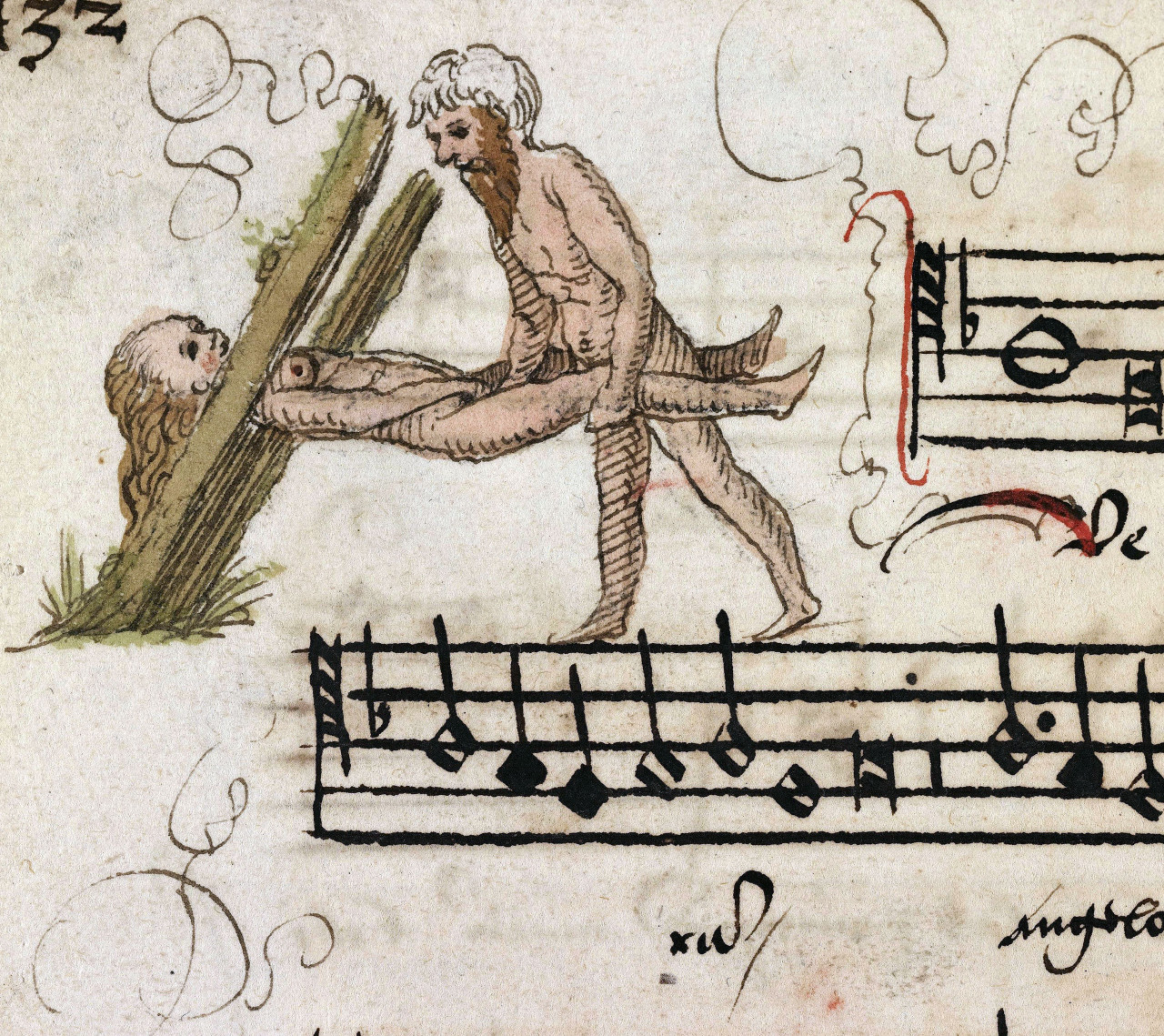
initial ‘A’ (‚Ave Regina Caelorum’ – ‚Hail, O Queen of Heaven’)
chansonnier, Bruges 1542
Cambrai, Bibliothèque municipale, ms. 126B fol. 132v
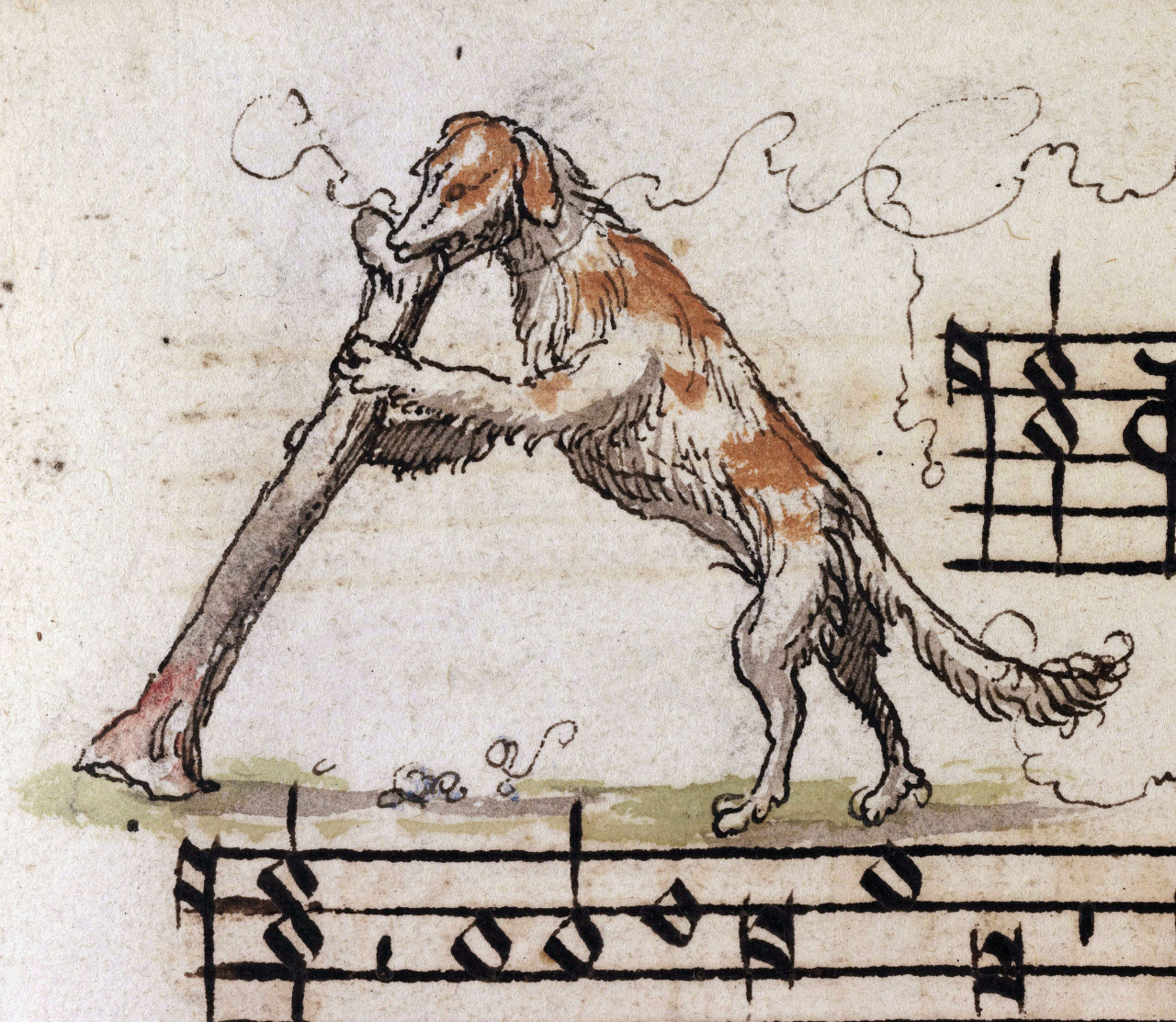
initial ‘A’
Chansonnier of Zeghere van Male, Bruges 1542
Cambrai, Bibliothèque municipale, ms. 127B fol. 23r
(via discarding images / discarding images)
Eine bemerkenswerte, sicher auch weil sehr angreifbare Arbeit bei den Donaueschinger Musiktagen 2015 war Patrick Franks „Theorieoper“ Freiheit – die eutopische Gesellschaft, unter Mitkomposition von Martin Schüttler und Trond Reinholdtsen. Jetzt online:
https://www.youtube.com/playlist?list=PLm029b4Ts4tFwkwS4rdDCtzI6TeZLxy-E
Theremin = Außerirdische. 1951.
Wikipedia:
Besondere Aufmerksamkeit fand die Filmmusik von Bernard Herrmann, der eine ungewöhnliche Instrumentation (ausschließlich Blechbläser, zwei Harfen, zwei Klaviere, drei Vibraphone und drei elektrische Orgeln sowie drei elektrisch verstärkte Solostreicher und zwei Theremins) einsetzte, um einen futuristischen Effekt zu erzielen. Es war zwar nicht, wie manchmal behauptet wird, die erste Verwendung des Theremins für einen Film – schon in Hitchcocks Ich kämpfe um dich ist eines zu hören – aber der Einsatz des Theremins in Science-Fiction-Filmen wurde nach Der Tag, an dem die Erde stillstand so populär, dass es auch in der Filmmusik der SF-Hommage/-Parodie Mars Attacks! Verwendung fand.
Wesentlich fortgeschrittener im Klangdesign ist dann „Forbidden Planet“ von 1956:
Die meines Wissens allererste Science-Fiction-Musik ist übrigens von 1777.
Jetzt geht es aber doch zuweit mit dieser Performance-BodyArt-Bewegung..
Professional singer Ambroz Bajec-Lapajne sang opera during neurosurgery for a brain tumor, at his physicians‘ request so they could monitor his singing ability and „avoid deficits after the procedure,“ he writes.
Keeping patients awake during brain surgery is common to reduce risk of complications or damage later. From Bajec-Lapajne’s YouTube post:„I sing two (first and last) couplets of Schubert’s lied “Gute Nacht”: the minor – major transition in order to see if I can still recognise the key change. All is fine until min. 2:40 when things start to get very interesting… It’s been more than a year since and I’m doing fine, continuing my professional singing career….“
(via usernamealreadyexists)
Scheint da geradezu ein Topos zu sein. (Wikipedia, Abschnitt „in popular culture“)
Mehr / ausführlicher davon bspw hier:
Edgar Ende, Vater des Kinderbuchautors Michael Ende. Eine große Entdeckung für mich, eine deutsch-tiefgründige Mischung aus Dalischer Fantastik und Magrittescher Lakonie.


