
Schöne Sammlung von Pd- (CSound- und andere) Patches

Der Vater des Konzeptualismus nennt seinen Sohn Max.
Konzept und Dramaturgie, Entwicklung
Eine anspruchsvolle Form, das ist eine Reflexion über den Verlauf von Zeit, über das Erleben in der Zeit, die Gedächtnis- und Erwartungsfunktionen des Menschen, über Proportionen, schöne Proportionen und Rhythmen, die einem heutigen Lebensgefühl entsprechen. Formale Innovationen sind vielleicht selten, die ersten kommen eigentlich erst mit dem Aufkommen der Teiligkeit in der Klassik; Bachs Fugen sind unförmig! Mozart ist der Meister der Proportionen, bei Beethoven kommt dann noch die Prozessualität hinzu. In der Moderne dann gab es vor allem die Momentform und die mechanische Prozessualität.
Krise der zeitlichen Gestaltung. In den letzten 20 Jahren gab es meines Erachtens nur zwei formale (= in dem Fall zeitliche Gestaltung betreffend) Innovatoren: Bernhard Lang und Michael Beil. Lang entfaltet die gliedernde Kraft der Wiederholung („Wiederholung trennt“) und schafft damit einerseits eine extreme Vereinzelung, andererseits dialektisch eine sehr spannende Gliederung und Beziehung zum Ganzen. Beil schafft mithilfe von Live-Video eine starke Verarbeitung von logischen Anschlüssen (die im Klingenden seit der Atonalität verloren gegangen sind) und Erinnerung. Etwas älter wäre noch Spahlingers dialektische und >utopische< Prozessualität zu nennen. Ansonsten ist Dramaturgie Handwerk, ein Zustand wird entweder gerade genug mit Informationsfluss am Köcheln gehalten ohne dass es redundant wird, Ideen werden aneinandergereiht oder gehen ineinander über, man verteilt seine Ideen nett in der Zeit, man macht einen Spannungsverlauf, schnelle und langsame Teile wechseln ab und irgendwo gegen den goldenen Schnitt hin gibt’s ein-zwei Höhepunkte und Überraschungen, aber das ist reines Handwerk, das kann auch ein Kirchenmusiker, das ist unsubstanziell, Inszenierungsdonner, Dramatisierung, und auch geheimniskrämerisch gegenüber dem Hörer statt reflexiv, der Komponist trumpft gegen den Hörer auf mit seinen Assen im Ärmel, entsprechend habe ich daran Unbehagen. Storytelling ohne Story. Porno mit Handlung, wo niemand Handlung will. Aber ich bin was Dramaturgie geht eben auch leidenschaftslos, lese auch keine Romane und mag Kino deshalb nicht, weil da immer, wirklich immer eine Geschichte erzählt werden muss; bei Romanen halte ich es mit Borges, dass es doch auch eine Zusammenfassung tut. Und schlaue Apercus, die irgendwo auf S. 274 in ein Narrativ verklebt sind, sind verschwendet. (Nicht dass ich jammern will über Niveauverlust – dafür haben die Stücke heute andere Qualitäten. In den vergangenen zehn Jahren sind viel mehr tolle Stücke komponiert worden als in den zehn Jahren davor. Es sind herrliche Zeiten.) Heute gibt es offenbar wenig dialektische Bewegungskraft, Teleologie hat unsere Zeit sowieso nicht. Form, das ist „die Ordnung der Dinge“ (Foucault). Das Konzertformat zwingt zum Entertainment, die Gefangenen brauchen Spiele. Daher dieser riesige Rhetorikaufwand bei Lachenmann, der selber aber nicht Thema wird. Krise der Entwicklung. Eine Idee widerstrebt ihrer Entwicklung, sie ist ausdehnungslos und nicht teilbar. Entwicklung ist erst mal ein Aufbrechen einer Qualität in Quantität. Dieses Geseiere von „Schubladendenken“. Dann hört doch auf, Sprache zu verwenden. „Konzeptmusik“, auf englisch ist der Ausdruck eigentlich noch viel besser, „concept music“ = Begriffsmusik. Denkmusik. Musik ohne Musik. Sinn-Sinnlichkeit. Konzeptkunst ist begriffliche Schönheit.
(via kfm)
Hab in diminuendo by shame (2014, noch nicht aufgeführt) eine Geige als Saphir verwendet – was zu meiner eigenen Überraschung sogar funktioniert.


On a summer day in 1846 at London’s grand Egyptian Hall, Joseph Faber unveiled one of the strangest inventions to come out of the 19th century’s technological boom. For one shilling a head, spectators were ushered into a dimly lit back room to see the Euphonia, a machine that boasted the ability to replicate human speech.

Dazu ein Longread: Automating the sound. Ars combinatoria and mystical automata
(via Neatorama)
Hab’s nicht so mit analoger Elektronik, aber das müsste man glatt mal probieren.

Hübsche Visualisierung von MIDI-files: Ein Histogramm, dessen Balken der Klaviertastatur entsprechen; die Länge gibt die Häufigkeit an.
Beethoven, Für Elise
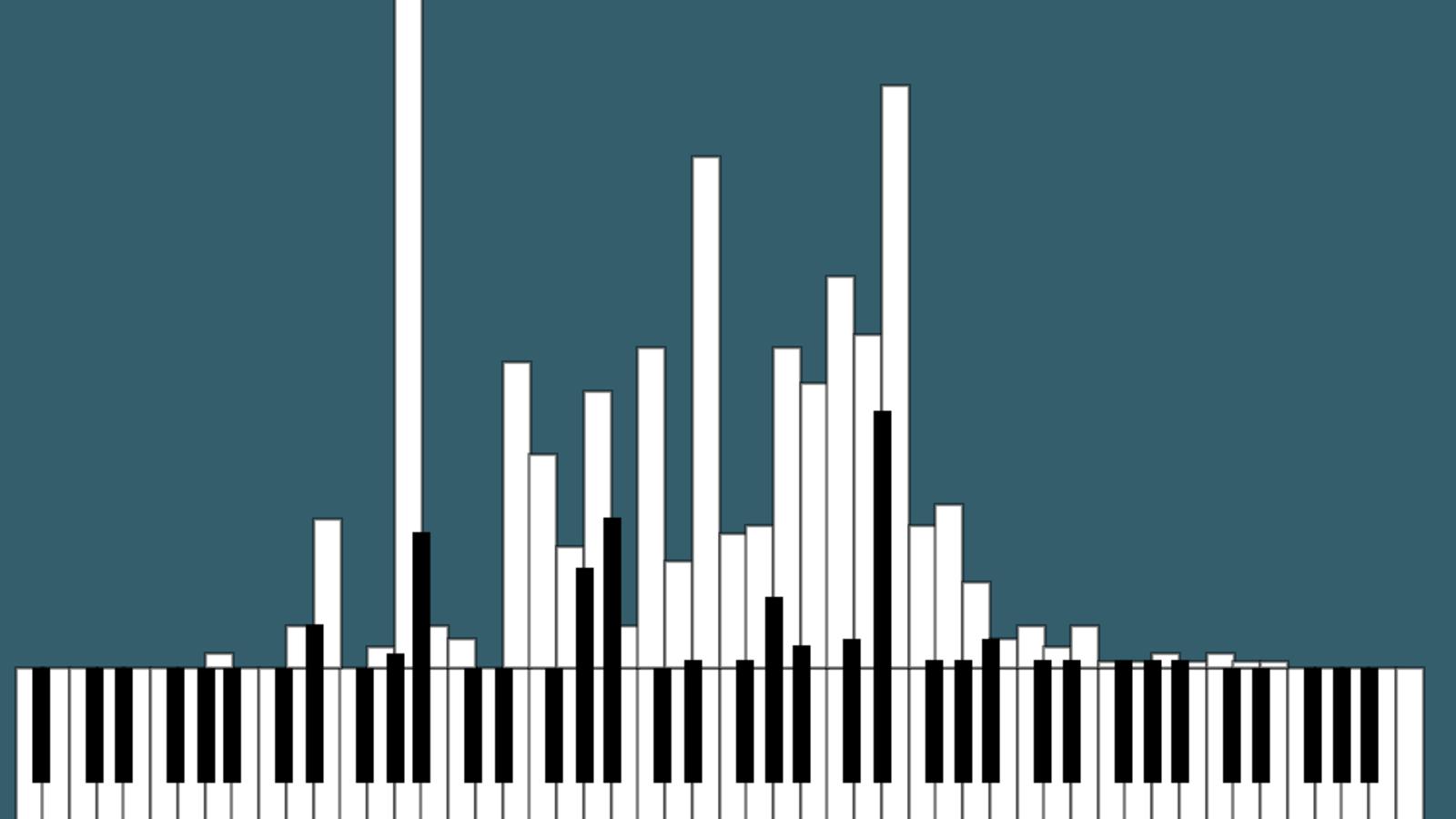
Schönberg, Klavierstücke Op.11
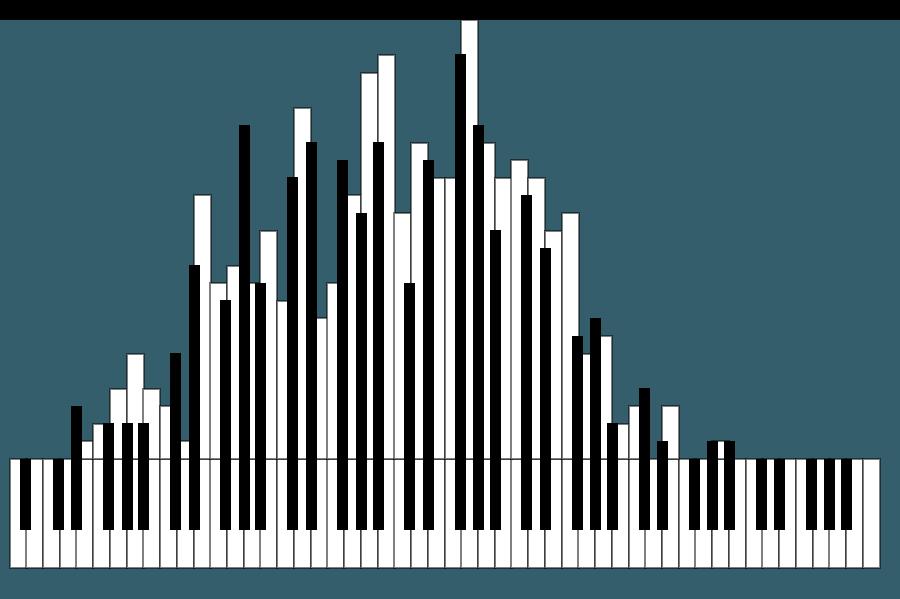
Chopin, Ges-Dur-Etüde
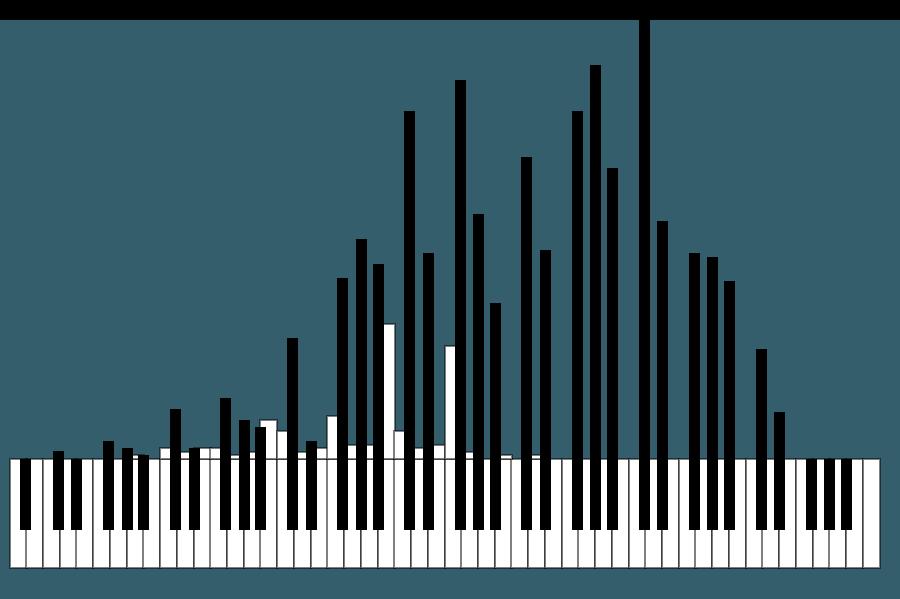
Chopin Op.25

(via Weltsicht)
Wer wollte nicht einen Mülleimer aus seinem Lieblingssong?
The printer was engineered by van Herpt, and it uses audio vibrations to alter the pattern of the printing. The pots take on textures that look like knit textiles or the texture of sand under gentle waves. What kind of music creates the most beautiful ceramics? Right now, it seems like the artists use rhythmic, abstract sounds to create their sculptures, but the possibilities are endless. Pottery wheel, out. 3D printed sonic ceramics, in.
(via thecreatorsproject)

