
Trotzdem unter #Natur abgespeichert, würde auch ohne Kloster noch geil aussehen.
(via FB)

Trotzdem unter #Natur abgespeichert, würde auch ohne Kloster noch geil aussehen.
(via FB)
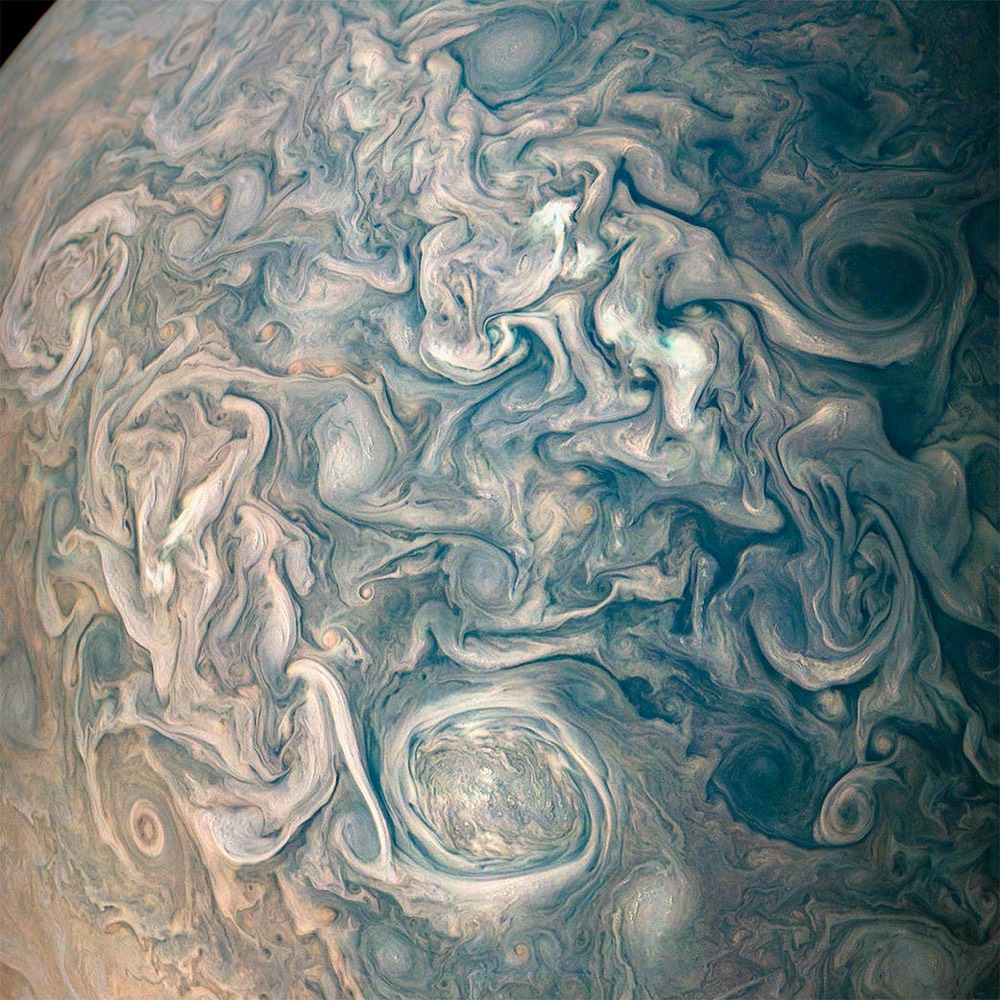
NASA’s Juno spacecraft took this color-enhanced image at 10:23 p.m. PDT on May 23, 2018 (1:23 a.m. EDT on May 24), as the spacecraft performed its 13th close flyby of Jupiter. At the time, Juno was about 9,600 miles (15,500 kilometers) from the planet’s cloud tops, above a northern latitude of 56 degrees.
The region seen here is somewhat chaotic and turbulent, given the various swirling cloud formations. In general, the darker cloud material is deeper in Jupiter’s atmosphere, while bright cloud material is high. The bright clouds are most likely ammonia or ammonia and water, mixed with a sprinkling of unknown chemical ingredients.
(via kottke)
Letzte Woche ging’s rum-
What do you hear?! Yanny or Laurel pic.twitter.com/jvHhCbMc8I
— Cloe Feldman (@CloeCouture) 15. Mai 2018
if you think of the word “brainstorm” you hear the word brainstorm. if you think of the words “green needle” you hear green needle. pic.twitter.com/kNBfIINpgL
— Vinny Skywalker (@sirvinnyd) 17. Mai 2018
yanny / laurel pic.twitter.com/P7nvs3QBOV
— Swear Trek (@swear_trek) 16. Mai 2018
(Gesehen 2016 in Australien.)
(via Neatorama)
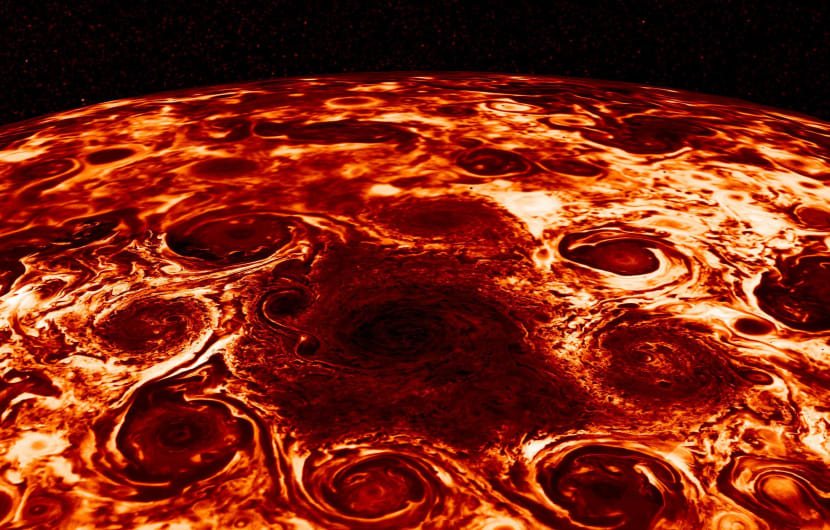
Wieder ein tolles Pic von da draußen.
Das Bild zeigt den zentralen Wirbelsturm am Nordpol des Planeten und acht Mini-Wirbelstürme, die ihn umgeben.
Die Bilddaten wurden im Infrarotspektrum aufgenommen. Die Farben geben also die Temperatur wieder: Die gelben Wolken sind etwa -13 Grad Celsius warm, die tiefroten -118 Grad Celsius
(via engadget)
