
Nachtrag zu gestern.
Noch nie hagelte es so schnell nach Erscheinen eines Videos von mir so viele Dislikes.
Kategorie Sonstiges
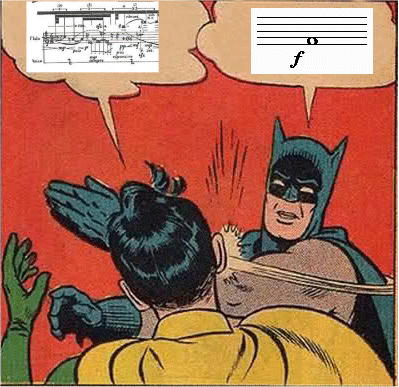
Confused Travolta & Joker @ Ferneyhough ScoreFollower
Confused Travolta & Joker towards Ferneyhough
Einer musste das Naheliegende tun.

Falls mir jemand einen Tipp hat – ich hab’s ums Verrecken nicht geschafft, aus dem mp4 ein gif zu achen, das auf FB bewegt angezeigt wird.
Früher auf Kulturtechno: Batman slaps Robin
Travolta/Puredata gibt’s schon.


Teuerste und billigste Instrumente


Worthly listet die 10 teuersten Instrumente der Welt:
http://worthly.com/most-expensive/instruments/feature-10-expensive-instruments-that-joined-the-million-dollar-club/
Hingegen diese spanischsprachige Website bildet in etwa das Gegenteil ab:


Und jetzt im Duett die Stradivari mit dem Dosendrumset. Entwickeln Sie geeignete Aufgabenstellungen für den Instrumentationsunterricht.
Musizierende Tiere (im Mittelalter) (12)
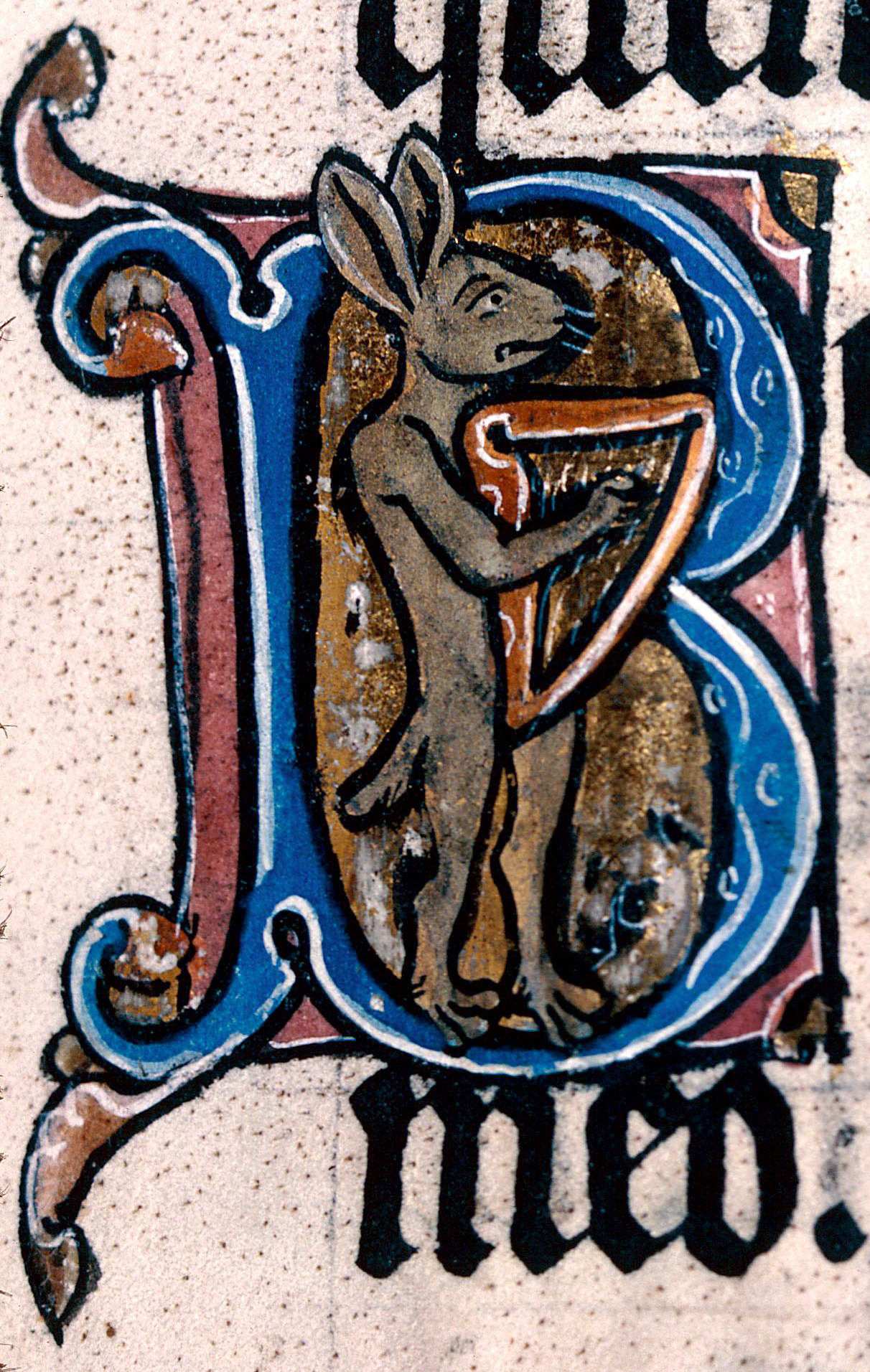
harping hare
psalter, Paris 13th century
Besançon, Bibliothèque municipale, ms. 140, fol. 41r
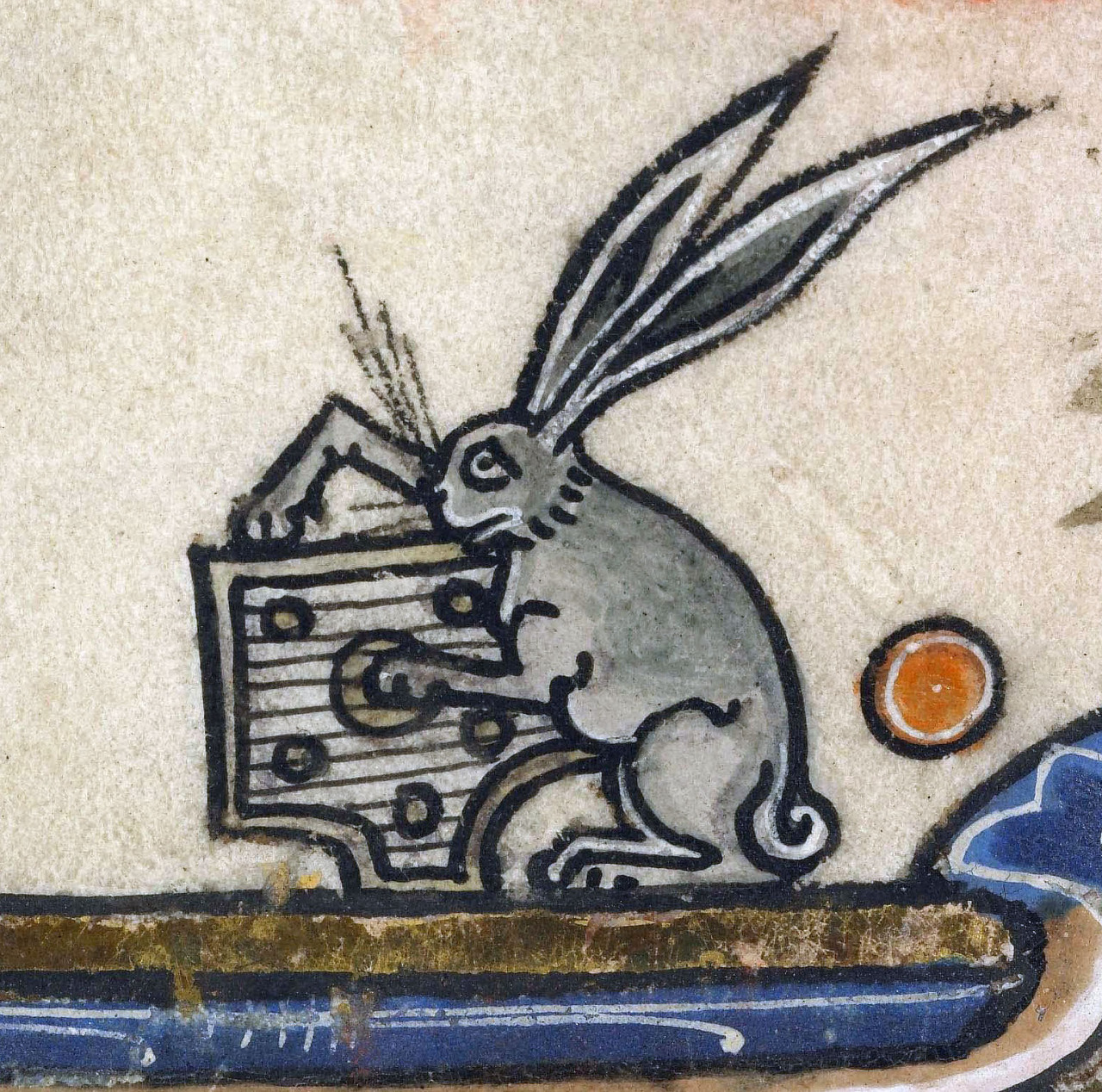
rabbit musician
Vincent of Beauvais, Speculum historiale, France ca. 1294-1297
Boulogne-sur-Mer, Bibliothèque municipale, ms. 130II, fol. 259r
(via discarding images / discarding images)
Früher auf Kulturtechno:
Musizierende Tiere (im Mittelalter)
Musizierende Tiere (im Mittelalter) (2)
Musizierende Tiere (im Mittelalter) (3)
Musizierende Tiere (im Mittelalter) (4)
Musizierende Tiere (im Mittelalter) (5)
Musizierende Tiere (im Mittelalter) (6)
Musizierende Tiere (im Mittelalter) (7)
Musizierende Tiere (im Mittelalter) (8)
Musizierende Tiere (im Mittelalter) (9)
Musizierende Tiere (im Mittelalter) (10)
Musizierende Tiere (im Mittelalter) (11)
Cameo-Auftritte von Philosophen
McLuhan:
Russel:
Derrida:
https://www.youtube.com/watch?v=0nmu3uwqzbI
Barthes:
Agamben:
Badiou:
Deleuze (ab 33:03 und 1:20:53):
(via Nils Markwardt)
Musizierende Tiere (im Mittelalter) (11)
Heute: Am Rande
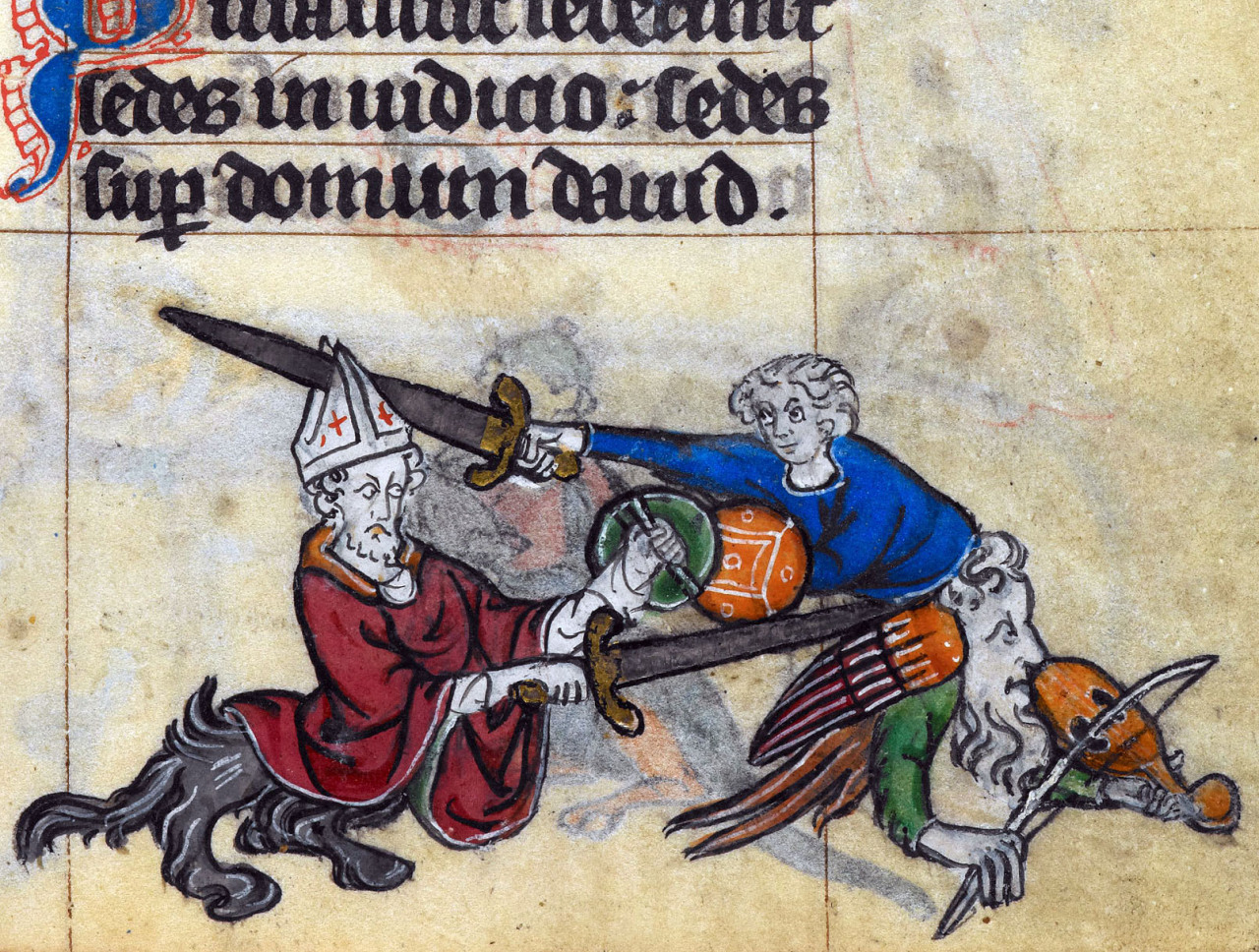
‘The Maastricht Hours’, Liège 14th century
British Library, Stowe 17, fol. 160r
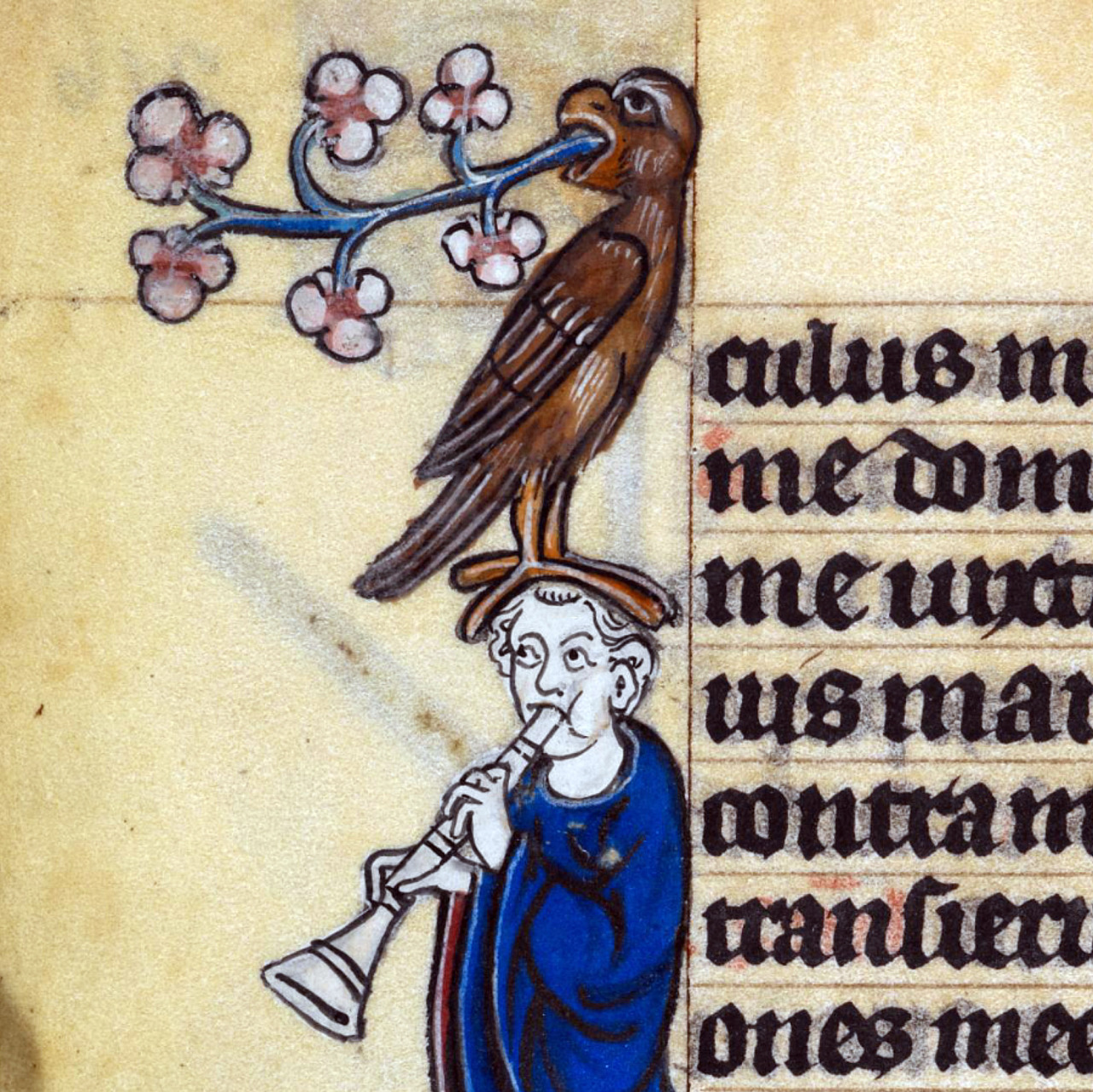
‘The Maastricht Hours’, Liège 14th century
British Library, Stowe 17, fol. 216v
(via Discarding Images / Discarding Images)
Musizierende Tiere (im Mittelalter)
Musizierende Tiere (im Mittelalter) (2)
Musizierende Tiere (im Mittelalter) (3)
Musizierende Tiere (im Mittelalter) (4)
Musizierende Tiere (im Mittelalter) (5)
Musizierende Tiere (im Mittelalter) (6)
Musizierende Tiere (im Mittelalter) (7)
Musizierende Tiere (im Mittelalter) (8)
Musizierende Tiere (im Mittelalter) (9)
Musizierende Tiere (im Mittelalter) (10)
The beautiful „hidden“ mathematics behind everyday objects & phenomenon
(via Kottke)
Früher auf Kulturtechno: Tragödie Mathematik