
Ganz versteh ich es nicht, irgendwie verwendet Jen Hill ein Kabel als >Tonabnehmer<.
Charts Music, instrumental version Video (Kammerakademie Potsdam)
Charts Music (instrumental version)
Kammerakademie Potsdam
KAPmodern 3.11.2016
Arrangement: Mark Knoop / Kammerakademie Potsdam / Johannes Kreidler
(Original: https://youtu.be/2-BZfFakpzc)
Zwei konzeptuelle Stücke
Wie zu jedem Jahresende fasse ich auch an dieser Stelle wieder kleinere Arbeiten zusammen. 2010 waren es vier, 2011 zwei, 2012 fünf, 2013 dreizehn, 2014 wieder fünf, 2015 elf, heuer sind es wieder mal zwei – zwei Bilder.
Form

Iconography

Damit geht Kulturtechno in einen kurzen Winterurlaub, nächster Beitrag am 7.1.!
Rhythmen mit Licht komponieren
.. wird für immer mehr Komponist*innen ein Betätigungsfeld. Hier eine Arbeit von Andreas Eduardo Frank.
Wie Homers Odyssee gesungen worden sein könnte
In diesem Stil die heutigen Nachrichten vortragen.
“In the course of the last years,” write Danek and Hagel, “we have developed a technique of singing the Homeric epics, which is appropriate for the primarily oral tradition from which these poems emerge.” The two scholars caution that their theoretical recreations are “not to be understood as the exact reconstruction of a given melody, but as an approach to the technique the Homeric singers used to accommodate melodic principles to the demands of the individual verse.” Accompanied by a four-stringed lyre-like instrument called a phorminx, “the Homeric bard” would improvise the “melody at the same time as he improvised his text, which was unique in every performance.” In the audio above, you can hear Danek and Hagel’s melodic recreation of lines 267-366 of book 8 of the Odyssey, in which Demodocus sings about the love of Ares and Aphrodite.
(via openculture)
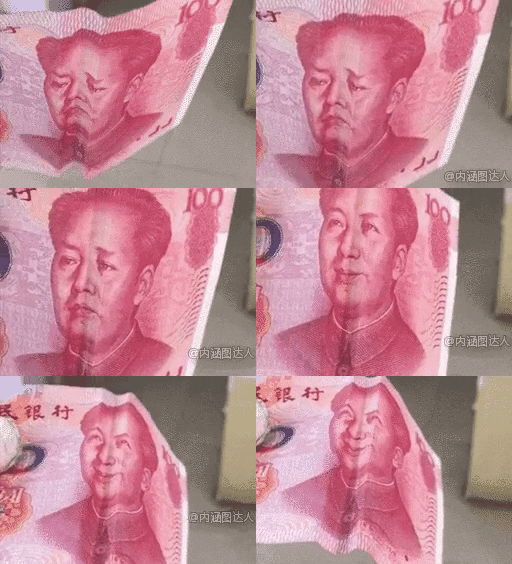
Trump, das Philosophem
Der Wahlsieg Donald Trumps hat eine sagenhafte Masse feuilletonistischer Energie hervorgebracht. Die Über(t)rumpelung der Intelligenzija durch diesen Populisten-Erfolg, seine Bedeutung und Symbolhaftigkeit einer >Wende< in der Weltpolitik, und nicht zuletzt die intellektuelle Kränkung, die davon ausstrahlt – er war ja bis dahin so etwas wie eine theoretische Unmöglichkeit -: das hat eine beträchtliche Denkmaschinerie in Gang gesetzt. Das vor allem mit Trump assoziierte Phänomen des „Postfaktischen“, zuletzt noch ergänzt von den „Fake-News“, ist von außen betrachtet durchaus erfreulich: Endlich wird mal wieder über nichts geringeres als die >Wahrheit< diskutiert. Es geht philosophisch zu! Was hier mitunter verhandelt wird, ist die Postmoderne, von der ich nach wie vor denke, dass es die gültige Bezeichnung der Welt ist, in der wir leben, und es ist die anspruchsvollste und beste Philosophie der letzten 50 Jahre. Das Internet, ich sage es seit 10 Jahren, ist das postmodernste Ding überhaupt, aber jetzt merken alle erst: Es überschüttet uns mit Wahrheiten noch und nöcher! Während nun die einen sagen, Trump sei die konsequente Ausgeburt der Postmoderne, sagen andere, Trump sei die konsequente Ausgeburt der Anti-Postmoderne. Das muss man dann doch auseinandernehmen:
Was haben unsere französischen Philosophen nicht Buch nach Buch geschrieben, um die Identität, die Repräsentation anzugreifen und zu >dekonstruieren<, das Besondere, das Einzigartige, das Partikulare zu eigenem Recht zu verhelfen usw. Und was macht die Demokratie? Der, der 50,1% der Stimmen gekriegt hat, hat das Sagen. Die These wird wohl zutreffen: Je öfter Hillary Clinton von den Latinos, den Schwarzen, den Homosexuellen und sonst wem Unterprivilegierten gesprochen hat, desto mehr Stimmen fielen an Trump. Denn die Mehrheit ist eben die der >Normalen<. Diversity-Politik verträgt sich nicht so recht mit dem demokratischen Mehrheitsprinzip. Beim Brexit das gleiche Bild – man hat mittlerweile den schauderhaften Eindruck, dass Wahlen es geradezu evozieren, Gesellschaften in zwei Lager zu spalten, die annähernd gleich groß sind –: die hauchdünne Mehrheit von 51,9 % bekommt dann das Recht über 48,1% zu bestimmen (wenn man nur die Wahlberechtigten zählt). Angesichts solcher Zahlen-Grobheit kann alles Differenz-Denken sich seine Theorien in die Haare schmieren.
Insofern: Nein, Trump ist nicht Postmoderne.
Liest man die Einlassungen zu französischen Philosophen, die in den letzten Monaten in deutschsprachigen Zeitungen erschienen sind, staunt man nicht schlecht, weil diese Denker überhaupt nicht wiederzuerkennen sind. Es sind groteske Karikaturen, Pappkameraden, die man sich in einer Mischung aus Missgunst und geistiger Trägheit zusammenbaut, um Halt durch Abstoßung in einer unsicheren Gegenwart zu finden.
(Der Aberwitz ist ja auch noch, dass Trump 2,5 Millionen weniger Stimmen gewann als Clinton. Es ist an dieser post-truth Wahl wirklich alles symbolisch.)
(Ein immer noch sehr befremdender Gedanke: Hätte Trump nicht diesen denkbar knappen Sieg errungen, hätte stattdessen Clinton jenen winzigen Vorsprung gehabt, würden all diese Texte nicht geschrieben worden sein, die Welt würde ganz anders gedeutet werden, beinahe alles wäre o.k.)
(Mancher lässt sich gar zum Fatalismus hinreißen bei diesem logisch scheinbar >unmöglichen< Ausgang, den niemand erwartet hat und der dennoch eintraf:
Trump war unschlagbar.
)
Und dann ist da aber auch jene Postmoderne, die den Wahrheitsbegriff >dekonstruiert< hat. Hier ist die Quittung: Postfaktische Politik, gefühltes Wählen und Regieren. Freilich kommen jetzt alle Schlaumeier aus den Löchern und erzählen, dass früher Politik auch schon ein eher flexibles Verhältnis zu sog. Fakten hatte usw. Aber der Unterschied ist doch: Heute werden Fakten gar nicht mehr geleugnet, man ist einfach trotzdem dagegen. Ein Milliardär gibt das Gefühl, der Mann der kleinen Leute zu sein. (Diese Irrationalität hat eine Nähe zur Kunst.)
Zitat Trump:
«Ich kann es nicht begründen, aber ich weiss einfach, dass es wahr ist.»
Soviele Zeitungstexte ich gelesen habe, keiner ist mir auf den Schirm gekommen, der dem beikommen konnte. Ja, vielleicht gibt es zwar so etwas wie Fakten, aber die sind eben nicht relevant genug! Außerdem, wollte man >Fake-News< verbieten, gäbe es dann eine staatliche >Wahrheitsbehörde< ? Insofern: Ja, Trump ist Postmoderne.
More than 30 years ago, academics started to discredit “truth” as one of the “grand narratives” which clever people could no longer bring themselves to believe in. Instead of “the truth”, which was to be rejected as naïve and/or repressive, a new intellectual orthodoxy permitted only “truths” – always plural, frequently personalised, inevitably relativised.
Under the terms of this outlook, all claims on truth are relative to the particular person making them; there is no position outside our own particulars from which to establish universal truth. This was one of the key tenets of postmodernism, a concept which first caught on in the 1980s after publication of Jean-Francois Lyotard’s The Postmodern Condition: A Report On Knowledge in 1979. In this respect, for as long as we have been postmodern, we have been setting the scene for a “post-truth” era.
Trump verkörpert nun mal auch das Wesen der repräsentativen Demokratie: Man übergibt die Macht dem Politiker, dem muss man vertrauen, und das ist eine Gefühlsangelegenheit. Wenn der Politiker stattdessen nachher mit Fakten kommt („alternativlos“), kann das den Vertrauensbruch darstellen.
Die wohl schlüssigste These besagt, dass die Welt sich gespalten hat in die Internationalisten und die Nationalisten, in die Gewinner und Verlierer der Globalisierung, in die Techno-Avantgarde und die Zurückgebliebenen. Ein „Kampf der Kulturen“.
Allein als Produkt technologischer Revolutionen und wirtschaftlicher Arbeitsteilung lässt sich die globale Gesellschaft nicht begreifen. It’s culture, stupid!
Aber: Was wir beobachten, ist kein simpler Kampf zwischen den Kulturen, sondern ein Kampf um die Kultur, ein Konflikt um den Stellenwert, den die Gesellschaft der Kultur zuschreibt, und die Frage, wie sie mit dem umgeht, was wir Kultur nennen. Hier stehen nicht unendlich viele, sondern genau zwei gegensätzliche Fassungen von Kultur miteinander im Widerstreit: die Hyperkultur und der Kulturessenzialismus.
Michael Seemann hat es schon vor Trumps Sieg erkannt:
Es gibt heute eine globalisierte Klasse der Informationsarbeiter, der die meisten von uns angehören und die viel homogener und mächtiger ist, als sie denkt.
Nun kann man, Peter Sloterdijk macht es mal wieder exemplarisch vor, die Zurückgebliebenen verachten und beschimpfen.
Das viel zitierte Volk hat in puncto Zynismus von den Mächtigen nichts mehr zu lernen. Es will sie zynisch haben, damit es sich mit ihnen auf einer Ebene fühlt. […] Der Populismus ist im Grunde nichts anderes als eine Regung, den Staat durch seine Verlierer zu annektieren.
Auch in der TAZ findet sich ein solcher Debattenbeitrag.
Denn man müsse die Sorgen und Nöte dieser Arschlöcher unbedingt ernst nehmen. Und zwar auch noch die dümmsten und unbegründetsten. Die besonders. Wir sollen auf die gesellschaftlich Abgehängten zugehen, die wirklichen wie die eingebildeten, sie fürsorglich bei der Hand nehmen und zart ans Licht der Erkenntnis führen. Das ist die Verantwortung, die wir als Privilegierte haben.
Man kann, der Bundes-Gauck spricht es aus, ihnen einfach mal etwas mehr Zeit geben.
„Nicht jeder fühlt sich als Weltbürger“. Menschen bräuchten eine Heimat, „möchten irgendwo dazugehören“. […] „Insgesamt sollten wir über eine Pause nachdenken, in der wir diskutieren, welches Ziel wir in welchem Tempo erreichen wollen.“ Es gehe ihm dabei nicht um Stillstand, sondern um Entschleunigung.
Schuld trifft aber auch gerade die, die sich auf der Sonnenseite wähnen (bis eben die Quittung von Wahlen eintrifft)- Die postmoderne Heiterkeit, mit der die globale Elite in den Kneipen von Neukölln auf englisch parliert, weilt nur so lange, bis die Kinder schulpflichtig werden; dann zieht man doch lieber aus dem bunten Neukölln nach Prenzlauer Berg, wo nicht so viele Migrantenkinder in derselben Klasse sitzen.
Man lebt als Student vielleicht im bunten Berlin-Neukölln, zieht aber weg, sobald das eigene Kind mit vielen Einwandererkindern in die Schule gehen müsste.
Mittlerweile kann man sich auch die Eigentumswohnung leisten, die die letzte Ur-Prenzlauerbergerin vertreibt; sie kommt dann mit der U-Bahn aus Schöneweide wieder in ihre frühere Wohnung, zum Putzen. Es ist verständlich, dass den Hartz-IV-Beziehern, denen der Staat seit 15 Jahren streng ins Gewissen redet, bei jedem Zeichen der „Willkommenskultur“ gegenüber Hilfsbedürftigen aus anderen Ländern argwöhnisch werden.
Ich verstehe nicht, warum plötzlich so viel mit Großzügigkeit argumentiert wird. In einem Land, das über zehn Jahre lang hartherzig war. Seit der Agenda 2010.
Die Globalisierung verlief neoliberal, d.h. sie hat Gewinner und Verlierer produziert. In den Medien heißt es, Deutschland sei (mal wieder) Exportweltmeister. Aber das >sickert< nicht durch.
Entgegen der ökonomischen Theorie ist nicht Konvergenz, sondern Divergenz das Ergebnis der Wohlstandsentwicklung der vergangenen Jahrzehnte. Einkommensscheren haben sich nicht geschlossen, sie haben sich im Gegenteil weiter geöffnet, vor allem auch, weil nicht alle gleichermaßen von höheren Kapitaleinkommen aus der Wertsteigerung und aus Vermögenserträgen von Aktien, Immobilien, Unternehmensgewinnen oder Monopolrenten profitieren konnten.
Sibylle Berg gibt zu Bedenken an ihresgleichen, den Künstlern, Intellektuellen, Hyperkulturheldinnen:
Dialog mit Andersdenkenden. Ich habe keine Ahnung, wie das funktionieren kann. Einfach mal nett mit Fundamentalisten plaudern. Die neuen polnischen Nationalkatholiken fragen, ob sie das mit der Nächstenliebe wirklich verstanden haben? Ein Versuch lohnt sich. Kurz innehalten, ehe man im Netz einen Andersdenkenden beschimpft. Freundlich antworten, ein paar Gegenfakten aufzeigen.
Die Filterbubble ist der Nationalstaat des globalisierten kleinen Mannes. Jedes Entfolgen auf Twitter, jedes Entabonnieren auf Facebook ist ein kleiner Grenzschuss.
Aber auch die Filterbubble hat ein Recht, so wie schwierige Kunst, die nun mal auch eher in Isolation weilt.
Mit Kunst verändert man die Welt nicht, sie bestätigt nur eine Minderheit in ihrem Gefühl der Überlegenheit. Kann man so sehen. Aber Theater können in Scheiß-Systemen auch Antidepressiva sein. […] In Zeiten der Verunsicherung braucht es Kultur, sonst dreht man komplett durch. Kunst kann Angst mindern, ein Gefühl von Gemeinsamkeit schenken. Und wenn es bloß darum geht, sich gut zu fühlen, so what?
Es ist wirklich schwierig: Wo tun Aufklärung, Rationalität und Bildung Not und wo beginnt Hochmut und Arroganz. Erziehung ist immer auch Diktatur. Der Griff der Mutter, der dem (noch) dummen Kind das Verbrennen seiner Hand auf der Herdplatte verhindert, ist das schon besserwisserische Bevormundung… Gegen das bessere Argument hilft zuletzt dann immer der neue >Godwin<, der Vorwurf der Arroganz, des "von oben herab".
*
2016 sind 5000 Menschen im Mittelmeer ertrunken. Der Islamwissenschaftler Wilfried Buchta prognostiziert, dass der Krieg in Syrien noch 10 Jahre weitergeht und weitere 1.000.000 Tote zur Folge haben wird. Was in der arabischen Welt passiert, ist nach und nach ein ziemlich großer Bürgerkrieg des Islam, der um seine eigene Modernisierung ringt. Ich bin überzeugt: Die stärkste Ursache dafür ist die Informationstechnologie. Ihr emanzipatorisches Potenzial, ihre aufklärerische Unweigerlichkeit, die sich über den Komfort des Universalbedürfnisses Kommunikation einschleicht, ihre Billigheit, ihre Botschaft von der westlichen Welt stürzt den Islam in seine schwerste Krise. Dazu kommen dann natürlich ökonomische Probleme, Machtkämpfe zwischen den >Großen<, der Fluch der Rohstoffe und die Sünden der kolonialen Grenzziehungen.
Das wird zwar kein, bewahre, Weltkrieg, aber durch die Globalisierung ein weltweit wirkender Krieg, vor allem in Form von Flucht und Terrorismus. Die >Festung Europa< wird immer mehr zur Realität werden.
Ich hatte ein paar Tage nach Trumps Wahlsieg den peinlichen Traum: Alles wird gut. Nachdem man so dermaßen überzogene Hoffnungen in Obama gesetzt hatte, denen er natürlich nicht gerecht wurde, kann es bei Trump doch nur besser werden, denn bislang erwartet man von ihm nur das Allerschlimmste. Ja, nach einiger Zeit stellt sich heraus, so hieß es in meinem Traum, Trump, der als Rabauke daherkam, jener TRUMP IST EIN FRIEDENSFÜRST, seine dumme Autorität muss sich ja letztlich alle Entscheidungen von Beratern einflüstern lassen, und die sind alle ziemlich gut informiert, haben >gesunden Menschenverstand<, dieses "Gemisch aus Logik und Moral" (Roland Barthes). ObamaCare etwa, so lässt er mittlerweile verlautbaren, will er entgegen dem Wahlversprechen nun doch nicht wieder ganz verwerfen. Und weil Trump so viel Macht auf sich einen konnte, kann er das dann alles durchziehen, ein GUTER DIKTATOR (Traum der Linken, die als Utopisten eine natürliche Sympathie für Gewalt haben).
*
Francis Fukuyama, der Theoretiker des Endes der Geschichte, räumt ein, dass ein beträchtlicher Haken an seiner Theorie das Bedürfnis der Menschen nach Identität ist – und das gewährleistet das postmoderne Allerlei, der Weltstaat und die Gottlosigkeit kaum.
Ein großes Problem in der Europäischen Union war es, dass sie unglaublich technokratisch an die Dinge heranging. Sie sprach nur von einer ökonomischen Integration und versäumte es, dafür zu sorgen, dass sich eine tiefere europäische Identität ausbildet. Auch deshalb ist es für Rechtspopulisten ein Leichtes, in Krisen nationale Ressentiments zu mobilisieren. Kurzum, eine bloße ökonomische Integration reicht nicht aus.
Im Rahmen unserer noch immer ungebrochenen Fortschrittsgläubigkeit mag dies eine Glücksvision sein: Die Freiheit unbegrenzter Machbarkeit dehnt sich auf die eigene Geschlechtlichkeit aus. Auf der Strecke bleibt die Überlegung, ob Grenzen für uns als Menschen nicht auch eine wichtige Bedeutung haben. Das gilt nicht nur in vergleichsweise banalem Sinn für die zwischenstaatliche Politik, sondern auch in einem tieferen Sinn für die menschliche Anthropologie. Grenzen sind unabdingbar für unsere Identitätsfindung. Insoweit der Mensch sich öffnet, erkennt er seine Möglichkeiten und das Potenzial, das in ihm steckt. Insoweit er sich abgrenzt, anerkennt er die ihm auferlegte Wirklichkeit. Seine Grenzen zu kennen, schafft Identität und Sicherheit.
Der Ostblock, dem die linke Internationalität und Zersetzung der alten Strukturen programmatisch war, musste das beispielsweise mit seinem absurden Personenkult kompensieren. Die Konfirmation ließ sich ebenso im neuen atheistischen Staat nicht so leicht abschaffen, man machte daraus erst mal die >Jugendweihe<, etc. Brechts Technokratie geht jedenfalls nicht von heute auf morgen. Es war auch kein Wunder, dass nach Wegfall des Ost-West-Antagonismus die Erde nicht zum Weltstaat verschmilzt, sondern im Gegenteil die Separative einziehen – der jugoslawische Bürgerkrieg hat es exemplifiziert.
Es gibt jetzt die Initiative, einen „Heimat- und Brauchtumsverein für das Netz“ zu gründen. Die Idee ist originell-bizarr, inhaltlich durchaus verständlich. Aber der bewusst alter-tümelnde Name fordert es natürlich heraus: Gehen nicht generell die Zeiten der >Tümelei< mit dem Weltnetz zu Ende?
Das Thema der kulturellen Identität scheint das große, vielleicht DAS Thema des 21. Jahrhunderts zu werden.
(So wie man das 20. Jahrhundert thematisch mit den Auseinandersetzungen der politisch-ökonomischen Ideologien assoziieren könnte: Diktatur/Demokratie, Kommunismus/Kapitalismus.)
*
Am Tag nach der Trump-Wahl habe ich getwittfacebooked: "Es muss eben alles erst schlimmer werden, damit es besser wird." So niederschlagend der Satz für alle bisherigen Bemühungen um eine bessere Welt erscheint, so viel Hoffnung drückt er andererseits in Anbetracht der Situation aus. Es sind die zunächst schmerzhaften Prozesse des Akzelerationismus.
Deshalb spricht es paradoxerweise auch für die Demokratie, dass Trump als Symptom daraus hervortreten konnte. So scheint der grösste Gewinn dieser Wahl gerade darin zu liegen, die Mangelstrukturen demokratischer Vernunft von einem ausserpolitischen Standpunkt zu offenbaren.
Jedenfalls: Irgendwo gibt es doch Fakten, auf die man sich einigen kann. Irgendwie ist ja nun doch ein Imperativ, dass sich absehbare 1 Million weitere syrische Kriegstote (vom Leid der Überlebenden noch gar nicht gesprochen) verhindern lassen müssen.
(Zur Erinnerung: „Zukunft“ bedeutet, dass man es noch ändern kann.)
Da es auch die Menschen gibt, denen, abgekürzt, die Postmoderne so etwas wie eine Identität gibt, eine Identät jenseits von kollektiven Religionen und nationalistischen Konstrukten, wäre das vielleicht doch die Utopie, die man noch weitertragen könnte.
Jeder Mensch hat so seine Identitäts-Anker. Religion, Nation, Ethnie, eine politische Verfassung, Familie, Kunst, Philosophie. Aber es ist halt auch so: Die sind nicht alle gleichwertige >Angebote<, es gibt bessere und schlechtere. Natürlich meine ich: Kunst und Philosophie sind die besten, und dafür "kämpfe" ich. Öfter mal mit dem Taxifahrer konversieren. Hartz-IV-Armut bekämpfen. Den Eltern Diversity erklären. Politiker*innen wählen, die bei Syrien-Verhandlungen nicht locker lassen. Identitätsformen reflektieren. Die Macht der Großkonzerne demokratisch kontrollieren. Und für die Musik gilt 2017, kein Witz: "postfaktisches Komponieren" (Arno Lücker). Hochmut und Demut, Erweiterung und Auflösung, oder, um ganz große Wörter zu verwenden, denen niemand gerecht werden kann: Anarchie, Freiheit und kategorischer Imperativ. Utopien, die über die Legislaturperioden und Festivaljahrgangsplanungen hinausgehen, sie sind eine Aufgabe von Kunst.


Musizierende Tiere (im Mittelalter)(22)
Harfen

‘The Maastricht Hours’, Liège 14th century.
British Library, Stowe 17, fol. 245r
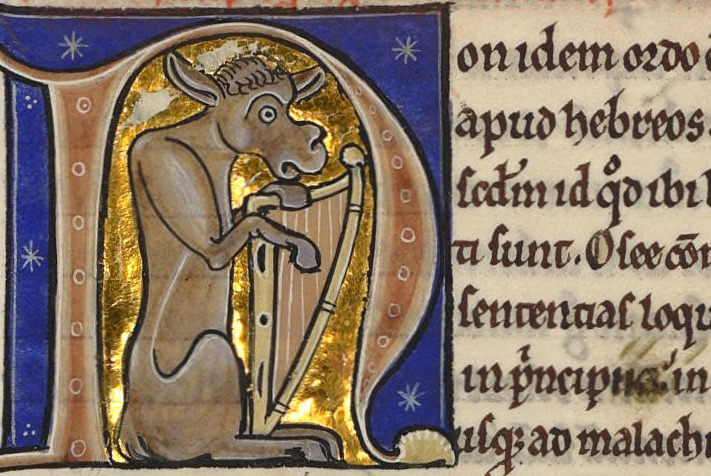
Bible, France ca. 1200.
Paris, BnF, Arsenal 4, fol. 155v
(via DiscardingImages / DiscardingImages)
Früher auf Kulturtechno:
Musizierende Tiere (im Mittelalter)
Musizierende Tiere (im Mittelalter) (2)
Musizierende Tiere (im Mittelalter) (3)
Musizierende Tiere (im Mittelalter) (4)
Musizierende Tiere (im Mittelalter) (5)
Musizierende Tiere (im Mittelalter) (6)
Musizierende Tiere (im Mittelalter) (7)
Musizierende Tiere (im Mittelalter) (8)
Musizierende Tiere (im Mittelalter) (9)
Musizierende Tiere (im Mittelalter) (10)
Musizierende Tiere (im Mittelalter) (11)
Musizierende Tiere (im Mittelalter) (12)
Musizierende Tiere (im Mittelalter) (13)
Musizierende Tiere (im Mittelalter) (14)
Musizierende Tiere (im Mittelalter) (15)
Musizierende Tiere (im Mittelalter) (16)
Musizierende Tiere (im Mittelalter) (17)
Musizierende Tiere (im Mittelalter) (18)
Musizierende Tiere (im Mittelalter) (19)
Musizierende Tiere (im Mittelalter) (20)
Musizierende Tiere (im Mittelalter) (21)