Skip to content
Kategorie Museum für moderne Kunst

Trudo Engels‘ fiktive Künstlerbiografien

Around 1995, the Belgian artist Trudo Engels decided he no longer wanted to be known by his name. So he created the collective Various Artists, composed of 24 fictitious artists, each with a different personality, and each of whom are him.

Der belgische Künstler spielt also permanent Karneval und schlüft mal in die Rolle eines abstrakten Malers, in die einer Splatter-Installateurin, in die eines Minimalisten, die eines radikalen Hungerkünstlers usw., lässt die Künstler auch untereinander kollaborieren oder bietet in Workshops anderen Leuten an, einmal in die Rolle von diesem oder jener zu schlüpfen. Es handelt sich um folgende, von Engels akribisch ausgearbeitete Künstler:

Intrudor, Armin Turing, 1973, Munich, Germany;
Innumerat Roselare, 1970, Du Bois, Pennsylvania, United States;
Bernard Leroy, 1975, Mississauga, Canada;
Johannes Korstjens, 1980, Haarlem, Netherlands;
Lima Drib, 1961, Liverpool, England;
n.e.b.u.s.i., 1968, Spitak, Armenia;
Digi_Shelf, Délia Sheehy, 1971, Limerick, Ireland;
Willy Depoortere, 1979, Poperinge, Belgium;
Aude Thensiau, 1975, Marseille, France;
Christl Coppens, 1986, Ghent, Belgium;
Martaque, Jamila Al Khawarizm, 1973, Cascais, Portugal;
Steina Zooeydottir, 1981, Bolungarvik, Iceland;
Late Trudo Engels, 1962-2009, Roeselare, Belgium;
Valereson da Silva, 1971, Pindamonhangaba, Brazil;
Eraser, Ana Omandichana, 1984, Siroki Brijeg, Bosnia and Herzegovina;
Cindy Janssens, 1985, Maastricht, Netherlands;
Freddy Grant, 1952, Kilarrow, Scotland;
Martn Coppens, 1986, Ghent, Belgium;
Robert Ingelbreć, 1982, Stockholm, Sweden;
Diederick Dewaere, 1974, St-Etienne, France;
Marcella.B, 1955, Arnhem, Netherlands;
Morice de Lisle, 1955, Kinshasa, Congo;
Sufferice, Albert Savereys, 1964, Petegem, Belgium;
Hélène Thensiau, 1976, Marseille, France.

For each VA, Trudo Engels has created a database containing their personal information: a CV, portraits, works, studios, stories, articles, etc. These archives form the basis of the Being an Artist sessions.
They were created, on the one hand, to develop further the VA, on the other to make them available to other artists (AV: Artistes Véritables, i.e., real, actual artists), who thus have the opportunity to free themselves of their own artistic practice. The VA are thus evolving towards a collective conceptual thought, an open structure accessible to all.

Beispielsweise wurde in der Luisa Strina Gallery in Sao Paulo eine Arbeit des Kollektivs ausgestellt, ein Zuckerschloss, begleitet von Performances und Theoriearbeiten.

Schon Jorge Luis Borges hat gerne mit fiktiven Biografien gespielt, z.B. in Pierre Menard, Autor des Don Quixotte, wo ein Autor komplett das Leben von Cervantes nachspielen will, sodass er dann quasi automatisch den Don Quixotte wortwörtlich schreiben würde.

Und was ist mit der Musik? Da wäre so ein Konzept natürlich auch möglich; was könnte man da nicht für kuriose, vielversprechende Komponistenleben entwerfen? – theoretisch. Aber praktisch ist derlei gar nicht vorgesehen, strukturell fast unmöglich (was soll denn die GEMA davon halten?). Schande! (Jennifer Walshe hat mal ein bisschen was in die Richtung gemacht, und Mike Svoboda (danke, Paul!).)

Danke für den Tipp, David!
Beethovens Eroica – die Anfangsakkorde seit 1924

Danke für den Tipp, Simon!

Ai Weiwei, Without Fear or Favour (BBC)

Danke für den Tipp, Harry!

Früher auf Kulturtechno: Ai Weiwei: Never Sorry

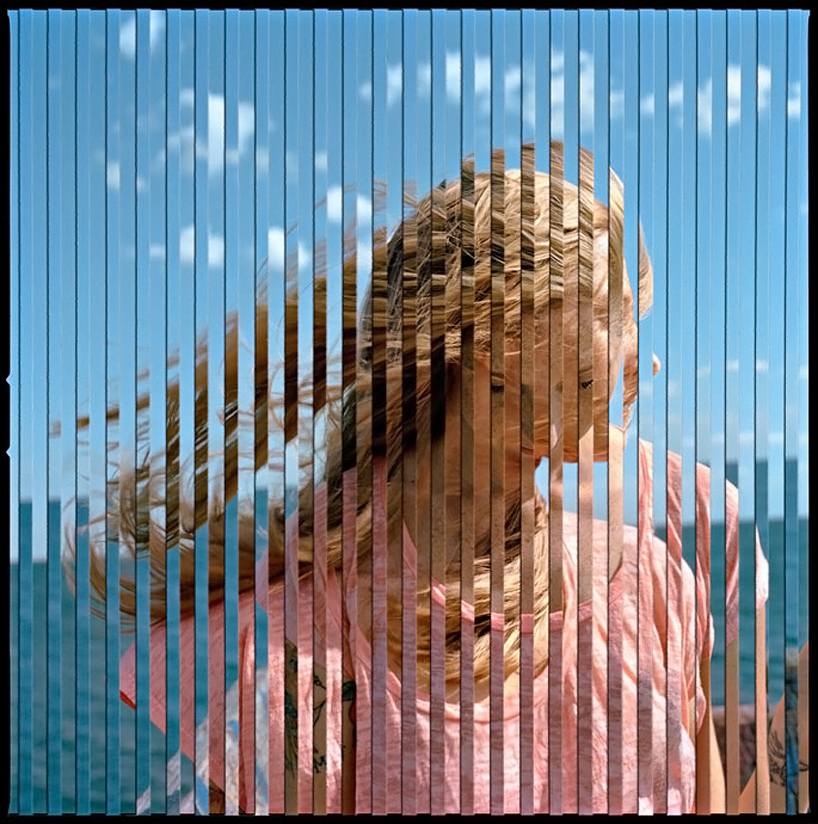
Zeit verschnipselt & versetzt

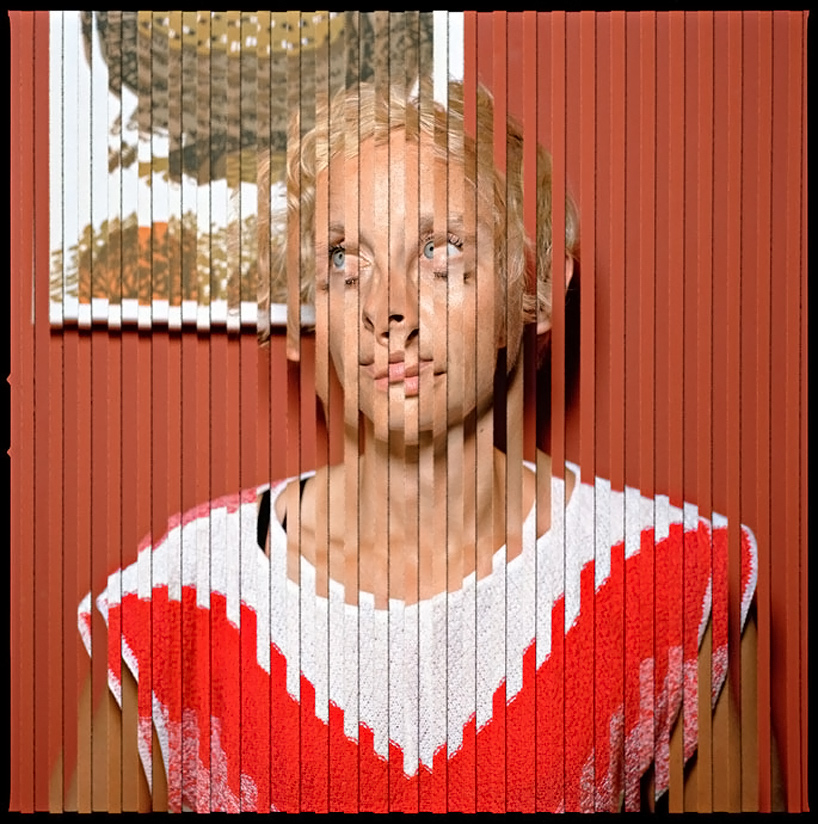
Arbeiten von Isabel Martinez. Ein ähnliches Verfahren wende ich gelegentlich in meiner Musik an:

(via designboom)

Michael Beil: Blackjack

Michael Beil hat wieder ein phänomenales Live-Video-Musikstück gemacht, hier zusammen mit dem Ensemble musikFabrik.

BLACKJACK für 17 Instrumente mit Live-Audio und Live-Video
Musik : Michael Beil
Regie : Thierry Bruehl
Ensemble musikFabrik
Leitung : Otto Tausk
Klangregie : Paul Jeukendrup

Früher auf Kulturtechno:
Doppel
Mahlzeit Provokation

Schuberts Musik mit Schuberts Gesicht vertont

Anton Wassiljew hat ein paar ulkige Rendering Studies erstellt, bei denen Visuelles in Klang bzw. Klangsteuerungen transformiert wird.

(via usernamealreadyexists)

Die Sandwichisierung der Moderne

Alles wird verwurstet!


Aus der Serie Sandwich Artist von Low-Commitment Projects.

(via unhappy readymade)

Radikale Antitraditionalisten

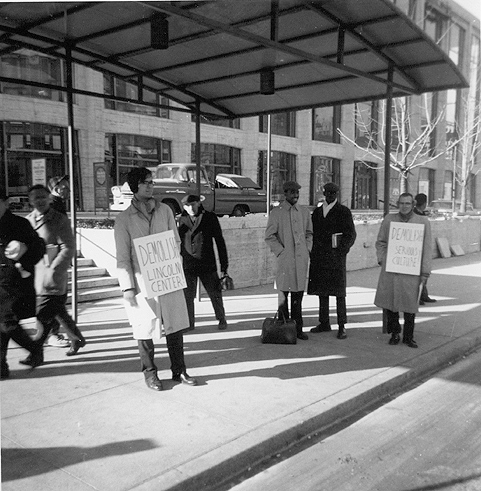
Heute: Fluxus

Tony Conrad and Henry Flynt
picket Lincoln Center
February 27, 1963

photo by Jack Smith

Früher auf Kulturtechno:
Radikale Antitraditionalisten. Heute: Franzosen.

Musik von Marcel Duchamp

http://www.geekchic.com/duchamp.gif


Duchamp-Marcel_1-Erratum-Musical.mp3

Erratum Musical (for three voices) (8:06)
S.E.M. Ensemble

In the turbulent years from 1912 to 1915, Marcel Duchamp, one of the most important artists of this century, worked with musical ideas. He composed two works of music and a conceptual piece — a note suggesting a musical happening. Of the two compositions, one is for three voices and the other combines a piece for a mechanical instrument with a description of the compositional system.

Although Marcel Duchamp’s musical oeuvre is sparse, these pieces represent a radical departure from anything done up until that time. Duchamp anticipated with his music something that then became apparent in the visual arts, especially in the Dada Movement: the arts are here for all to create, not just for skilled professionals. Duchamp’s lack of musical training could have only enhanced his exploration in compositions. His pieces are completely independent of the prevailing musical scene around 1913.

„Erratum Musical“ is written for three voices, included in the Green Box, which Duchamp published in 1934. It is undated, but has always been ascribed as having been written in Rouen in 1913. It was probably written during one of Duchamp’s visits to his family, as his parents and sisters lived there. Duchamp wrote the piece for his two sisters and himself–each part is inscribed with a name: Yvonne, Magdelaine, Marcel. The three voices are written out separately, and there is no indication by the author, whether they should be performed separately or together as a trio.

In composing this piece, Duchamp the made three sets of 25 cards, one for each voice, with a single note per card. Each set of cards was mixed in a hat; he then drew out the cards from the hat one at a time and wrote down the series of notes indicated by the order in which they were drawn.

(via UbuWeb)

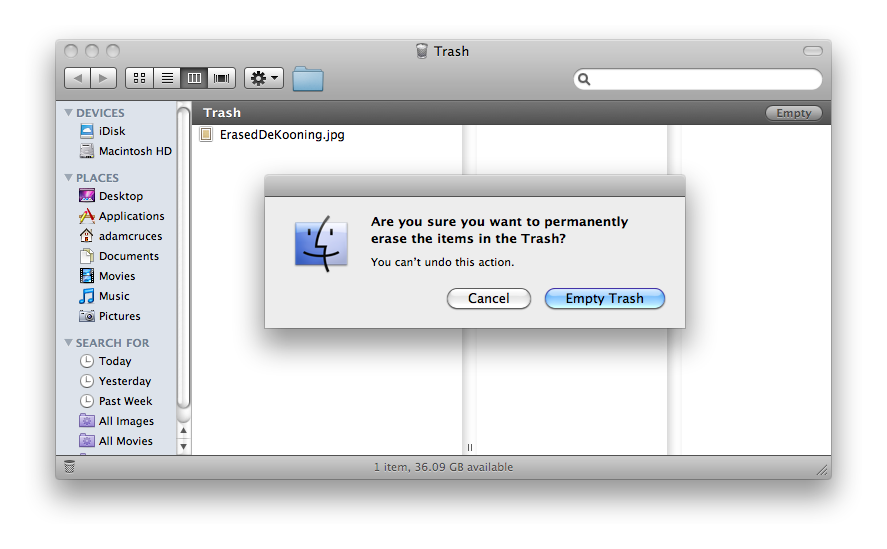
Erased Erased de Kooning

‘Deleted Rauschenberg’ (2011), ein schönes digitales Re-Enactment des berühmten Erased De Kooning-Bildes, von Adam Cruces.

(via pietmondriaan)