Endlich spricht’s jemand an.
(via Schlecky)

Einfache Version:

Erweiterte Version:

Applaus dafür! Und jetzt lest das: http://www.kulturtechno.de/?p=15433
(via Musikmitallem)
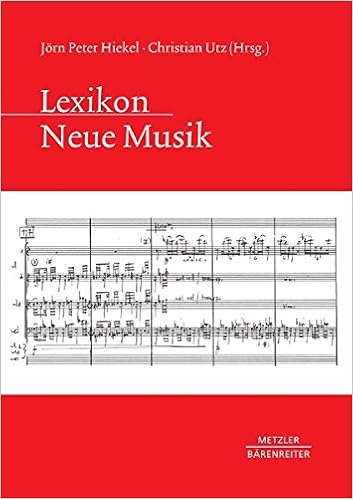
Jörn Peter Hiekel / Christian Utz (Hrsg.): Lexikon Neue Musik, 703 Seiten.
Eine Publikation gibt es seit März, auf die ich gerne hinweisen möchte: Endlich existiert ein umfassendes, gleichsam systematisches wie historisches Lexikon der Neuen Musik – gemeint ist die Neue Musik nach 1945, bis zur unmittelbaren Gegenwart. Neben neun großen thematischen Essays kommen 103 ausführliche Sachartikel zur Darstellung, darunter auch, endlich wurden meine Kritiken / Kritiken gehört, Texte zu „Material“ und „Struktur“; auch die „Konzeptuelle Musik“ hat einen eigenen Artikel. Der Eintrag zur „Postmoderne“ ist ein Juwel. So ergibt sich ein hervorragendes Panorama und neues theoretisches Standardwerk der Neuen Musik, das ihr gebührt und überfällig war. Insgesamt überwiegt in der Darstellung ein historischer Ansatz. Originale oder gar originelle Definitionsansätze finden sich nur sporadisch. Aber der historische Ansatz ist Verdienst genug – implizit wird hier eine Ideengeschichte der Neuen Musik geschrieben; ein Desiderat.
(Ein eklatantes Versäumnis hingegen ist, dass die Neue Musik der DDR offenbar schlicht vergessen wurde, außer als Abschnitt des „Weltbezüge“-Aufsatzes kommt sie in dem Buch wenn überhaupt bestenfalls zufällig vor, wo es ansonsten eigene Artikel zu Osteuropa, Japan, Israel, Iran, Korea etc. gibt. Für ein deutschsprachiges Lexikon diesen Anspruchs ist das schlicht unverständlich. [Siehe also dazu weiterhin beispielsweise Nina Noeskes Monographie Neue Instrumentalmusik in der DDR])
Das Lexikon beschäftigt sich mit der Neuen Musik seit 1945 und bringt ihren überbordenden Facettenreichtum in umfassender Weise und jenseits von ästhetischen Grabenkämpfen zur Darstellung. Ein breit aufgefächerter lexikalischer Teil mit Sachartikeln u.a. zu Theorie, Formen und Gattungen, Instrumenten und Ensembles, Regionen, Medien, Interpretation und Aufführung erläutert umfassend die Verästelungen der neueren und neuesten Musikgeschichte. Er ist verbunden mit neun ausführlichen Essays von namhaften Autorinnen und Autoren, die musikgeschichtliche Zusammenhänge darstellen und Grundfragen der Neuen Musik reflektieren. Der Horizont dieses Bandes reicht einerseits über den europäischen Kontext, andererseits auch über den der musikalischen Avantgarde deutlich hinaus.
Orientierung im Dschungel widerstreitender Tendenzen der Neuen Musik
Der Band schließt damit eine empfindliche Lücke des musikwissenschaftlichen Schrifttums
Unentbehrlich für all jene, die sich beruflich oder privat mit der Musik des 20./21. Jahrhunderts beschäftigen.
http://www.amazon.de/Lexikon-Neue-Musik-Neuerscheinungen-Metzler/dp/3476023265
Die Frage musste früher oder später aufkommen – wie sieht es aus mit der historischen Aufführungspraxis bei Klassikern der Moderne? Kann man Originalinstrumente noch auftreiben oder rekonstruieren? Fallbeispiel: Clapping Music von Steve Reich.

According to the press release, two Juilliard415 members will perform the piece, each wearing a pair of Reich’s hands like gloves. Staff surgeons and bioengineers at the Juilliard School are said to have completed a complicated procedure that entailed severing and hollowing out Reich’s leathery paws and growing a genetic copy to be used by the second clapper. Meanwhile, an in-house dermatologist has used lasers to remove scars and callouses from the 78-year-old’s hands to restore the skin’s surface to its original 1972 condition.
Lore Lixenberg hat’s getan.
Launch of cd and download of more of Nancarrow being recorded for release early next year
(Das Original:
Hübsche Visualisierung von MIDI-files: Ein Histogramm, dessen Balken der Klaviertastatur entsprechen; die Länge gibt die Häufigkeit an.
Beethoven, Für Elise
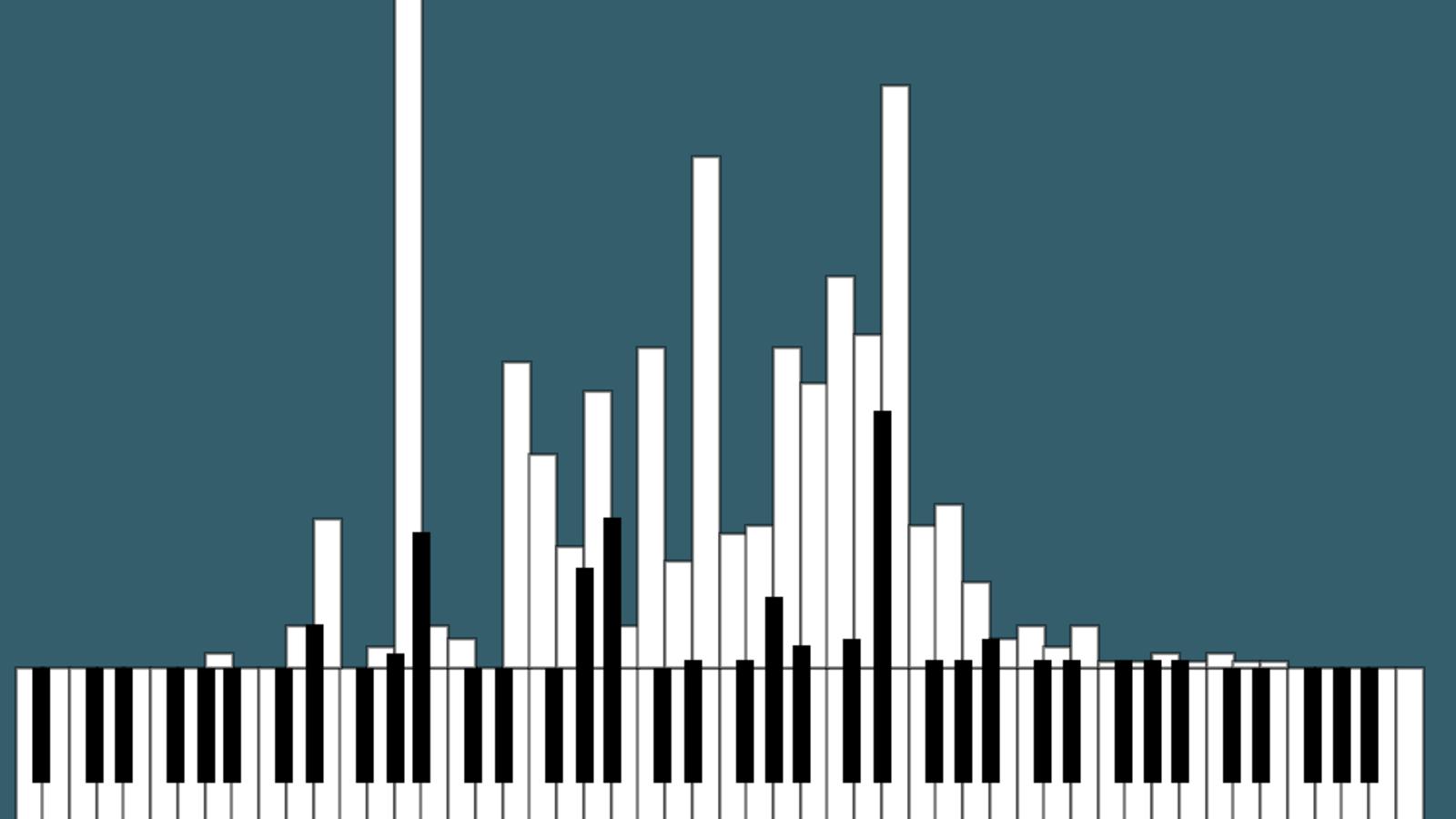
Schönberg, Klavierstücke Op.11
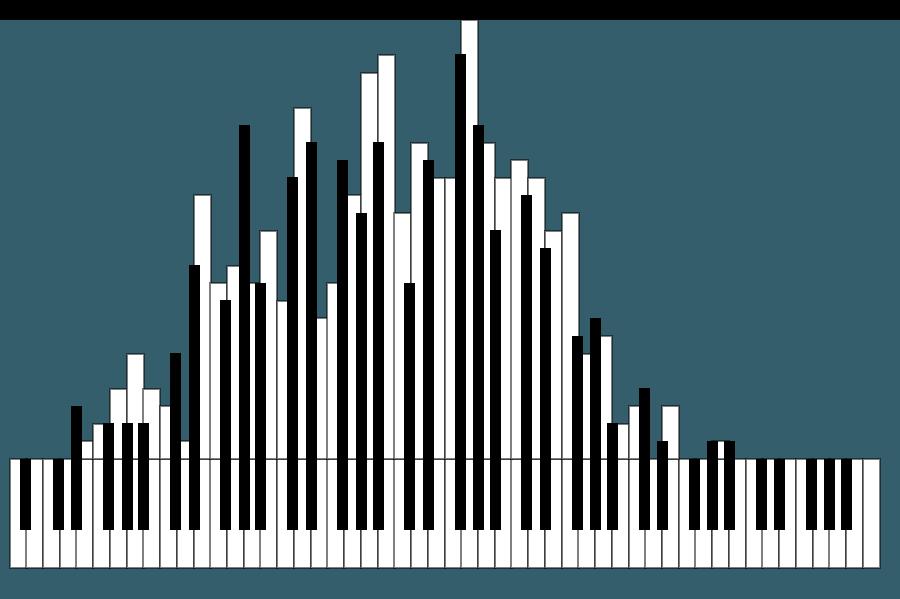
Chopin, Ges-Dur-Etüde
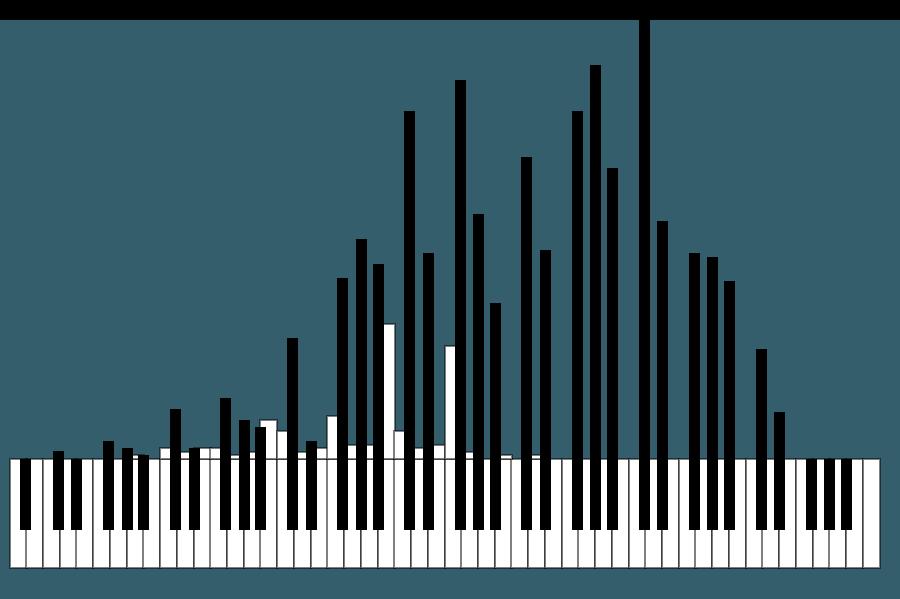
Chopin Op.25

(via Weltsicht)
Musikwissenschaftler könnten doch auch mal solche Videodokus über Strömungen der Neuen Musik machen…
(via Nerdcore)
Wer wollte nicht einen Mülleimer aus seinem Lieblingssong?
The printer was engineered by van Herpt, and it uses audio vibrations to alter the pattern of the printing. The pots take on textures that look like knit textiles or the texture of sand under gentle waves. What kind of music creates the most beautiful ceramics? Right now, it seems like the artists use rhythmic, abstract sounds to create their sculptures, but the possibilities are endless. Pottery wheel, out. 3D printed sonic ceramics, in.
(via thecreatorsproject)