In München haben Fans von Michael Jackson nach seinem Tod irgendwo ihrer Trauer Ausdruck geben müssen – gegenüber vom Hotelzimmer, in dem Jacko früher logierte, steht eine Statue des Renaissance-Komponisten Orlando di Lasso (1532-1594), der in München lange Zeit wirkte. Die wurde kurzerhand mit allerlei Devotionalien in eine Michael-Jackson-Statue umdefiniert. Michael di Lasso, Orlando Jackson.
Aufruf: Geht zum Zentralfriedhof in Wien und macht was aus den Denkmälern von Mozart, Beethoven, Gluck, Schubert, Wolf, Johann Strauß, Brahms, Schönberg.
Occupy Orlando di Lasso
Kreidler-Porträt @Positionen
Gisela Nauck hat für die Zeitschrift „Positionen“ ein Porträt über mich geschrieben.
Die aktuelle Ausgabe mit vielen interessanten Texten zur Gegenwartsmusik kann online bestellt werden – gedruckt oder als ePaper -, für 8€ .
Kreidler zu TTIP, Umfrage des Goethe-Instituts
Das Goethe-Institut hat verschiedene Künstler zu ihrer Meinung über das geplante Transatlantische Handelsabkommen TTIP befragt, u.a. mich. Ich denke, alle wissen Bescheid, und es dürfte sich auch herumgesprochen haben, dass die Sache reichlich bedenklich ist. Unzählige Initiativen schlagen Alarm; so auch das Goethe-Institut. Danke.
The ratification of the Transatlantic Trade and Investment Partnership (TTIP) and the anticipated consequences for the cultural sector cause headlines and controversies in Europe, especially among artists. In the United States, however, TTIP is hardly talked about. We asked German and US musicians and composers about their thoughts.
The German musicians and composers are concerned that the quantitative focus on market share, sales figures and financial value might outweigh quality and diversity if culture is treated as a commercial good within TTIP. This could lead to more power and business for big companies and production firms and threaten the current opportunities, market access and conditions. The United States are a big music market and the country of origin of a comprehensive musical repertoire that is in high demand internationally.
ISIS burnstruments
Gestern ging’s rum: ISIS verbrennt Instrumente, die angeblich nicht islamkompatibel sind – Drumsets und Keyboards.
Das MoMa New York erwirbt Alvin Luciers „I am sitting in a room“
Eine interessante, komische, bemerkenswerte Neuigkeit. Das MoMa nimmt den Rekursionsklassiker von Alvin Lucier in seine Sammlung auf.
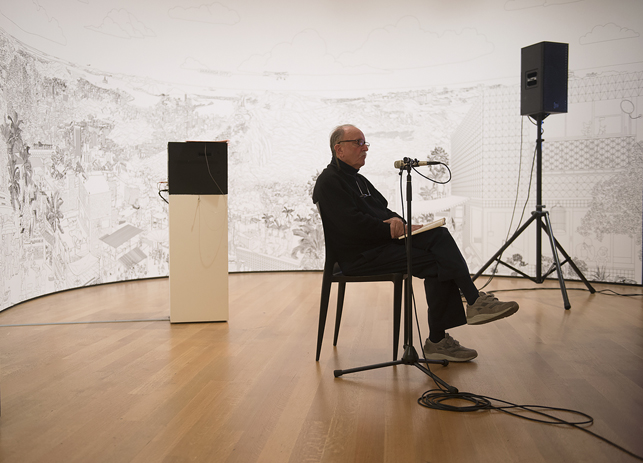
How does a museum acquire an experimental music performance? What does the museum actually receive? And if the museum doesn’t acquire a physical object, what is the value of adding this work to the collection? In consultation with Lucier himself, the curatorial team decided that the acquisition would include both the ability for others to perform the work in the future and an archival recording of the composer performing the piece himself at MoMA.
Also wenn es (hoffentlich) nicht darum geht, urheberrechtlich eine Vitrine drumzustülpen, dann kann es sich hier wohl mehr um einen symbolischen Akt handeln, denn das Stück ist kein Objekt, das sich im Depot verstauen ließe. Das ist vielleicht gar keine schlechte Sache, so eine offizielle ‚Adelung‘, die Aufnahme an in den Kanon. Und das muss dann wohl ein Museum machen, auch wenn es sich um etwas immaterielles wie Musik handelt.
43000 Jahre alte Musik
Ich hatte hier mal den Bericht von dem prähistorischen Flötenfund in einer schwäbischen Höhle – Erfindertum hat im Ländle wahrlich Tradition. Im folgenden geht’s um eine Flöte, die evtl. sogar noch älter ist, und hier auch der Versuch, wie die Musik darauf geklungen haben könnte. Gleich mal sampeln.
It is perhaps possible that the much-underestimated Neanderthals made their own flutes. Or so a 1995 discovery of a flute made from a cave bear femur might suggest. Found by archeologist Ivan Turk in a Neanderthal campsite at Divje Babe in northwestern Slovenia, this instrument (above) is estimated to be over 43,000 years old and perhaps as much as 80,000 years old. According to musicologist Bob Fink, the flute’s four finger holes match four notes of a diatonic (Do, Re, Mi…) scale. “Unless we deny it is a flute at all,” Fink argues, the notes of the flute “are inescapably diatonic and will sound like a near-perfect fit within ANY kind of standard diatonic scale, modern or antique.” To demonstrate the point, the curator of the Slovenian National Museum had a clay replica of the flute made. You can hear it played at the top of the post by Slovenian musician Ljuben Dimkaroski.
(via openculture)
Insektensounddatenbank
Die Soundfilisierung der Welt geht voran. Hier eine Website mit haufenweise Aufnahmen von Insekten.
The sounds of crickets courting and flies flying familiar to many of us, but have you heard a rice weevil larva eating inside a wheat kernel, a termite cutting a piece of wood, or a grub chewing on a root? Modern insect detection and control technology makes use of these subtle signals, sampled below.
http://www.ars.usda.gov/sp2UserFiles/person/3559/soundlibrary.html
Mit der Zunge hören
In den USA entwickeln sie ein Gerät, mit dem man (bspw. Hörgeschädigte) mit der Zunge Schallwellen aufnehmen kann.
In the future, those with substantial hearing loss may no longer need a doctor to surgically implant a cochlear device into their ear to restore their sense of sound.
If researchers at Colorado State University are successful, they may just pop a retainer into their mouths. The team of engineers and neuroscientists are developing a hearing device that bypasses the ear altogether and puts words in the mouth.
Ich bin schon gespannt auf den ersten Zungenkuss mit dem Ding. Unser Lied.
(via BoingBoing)
Orgelstück mit Barcode-Sonifikationen
Ist ja eher Schmu im Vergleich zu meinen Scanner Studies / Scanner Studies 2…
(Danke für den Tipp, Stefan!)