Skip to content
Kategorie Technologik

Mikrobenstimulation funktioniert mit Mozart am besten (am allerbesten mit der Zauberflöte)

or all the chatter about how Mozart makes your kids smarter (false!) or how it helps with the SATs (possibly), the one thing that Mozart definitely seems to do is make sludge-eating microbes digest faster. A sewage treatment plant in Treuenbrietzen, Germany, has experimented with different operas, playing them at high volume through loudspeakers set up around the site. „The Magic Flute“ seems to work best. Anton Stucki, the plant’s chief operator, believes the reverberations quicken the pace for breaking down refuse. „We think the secret is in the vibrations of the music, which penetrate everything—including the water, the sewage, and the cells,“ he says. „It creates a certain resonance that stimulates the microbes and help them work better.“ Stucki doesn’t even like opera; he’s a rock ’n‘ roll fan. But he tolerates Mozart because it makes the microbes more efficient, saving the plant up to $1,250 a month.

(Video gehört nicht original zu dem Text)

Mozart – ein Pionier der Land Art (oder so).

(via Neatorama)

ps.: Nun gut, dafür steigert Popmusik die Effizienz von Solarzellen (besser als Klassische Musik).

Sebastian Berwecks Doktorarbeit über das Aufführen elektroakustischer Musik

Sebastian Berweck hat promoviert! Herzliche Gratulation. Allein schon der Titel der Dissertation spricht Bände: It worked yesterday.

Playing electroacoustic music raises a number of challenges for performers such as dealing with obsolete or malfunctioning technology and incomplete technical documentation. Together with the generally higher workload due to the additional technical requirements the time available for musical work is significantly reduced. Many of the issues have their roots in composers, publishers, performers and promoters considering how their work process could easily be adapted to the additional demands of electroacoustic music. It was also found that the employment of music technologists cannot sufficiently make up for incomplete documentation and inadequate archiving of compositions. Using case studies made up of single compositions and whole concerts, solutions are proposed, which the several parties could effortlessly employ to considerably ease the process of preparing and performing electroacoustic music. Finally hands-on methods on how performers can deal with the situation as it is today are proposed. It is being hoped that by implementing these strategies not only better performances of electroacoustic music will be facilitated but also that electroacoustic works in general will enjoy a longer life-span in the future, thus enabling the sustenance of a vivid electroacoustic repertoire.

Hier kann die Arbeit heruntergeladen werden:

http://eprints.hud.ac.uk/17540/

Beschreibe deine Work/Life-Balance

Interview mit Harry Lehmann über sein Buch „Die digitale Revolution der Musik“

ePlayer – freie Samples online

Auf dieser Website gibt es eine riesige Bank an ePlayer-Samples zum freien Download:

http://www.philharmonia.co.uk/explore/make_music

Früher über ePlayer auf Kulturtechno.

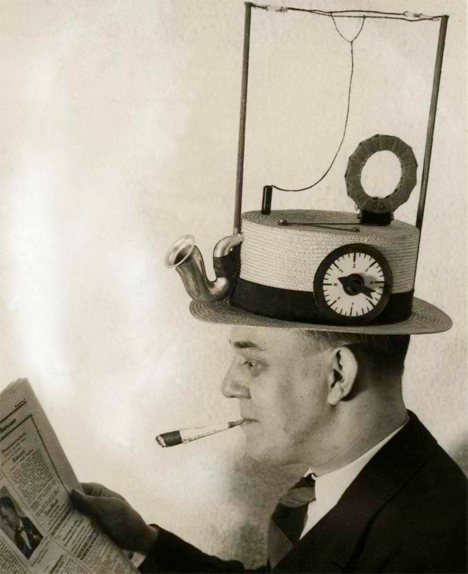
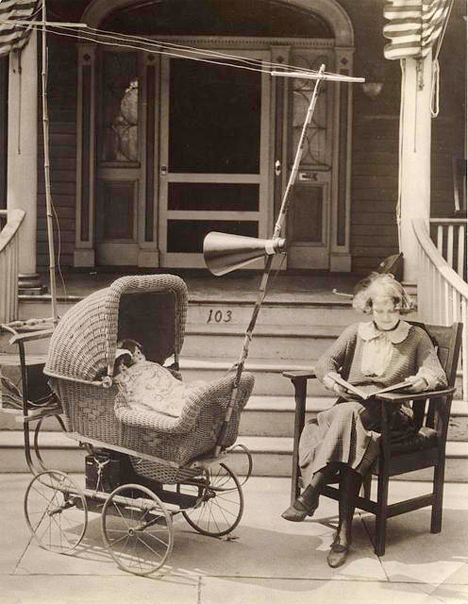
Kinderwagenradio und Radiohut

(via Neatorama)

Vortrag „Die digitale Revolution der Musik – Eine Musikphilosophie“ von Harry Lehmann

Vortrag am 2. Juli 2013 an der Bauhaus-Universität sowie der Musikhochschule „Franz Liszt“ in Weimar.
Es handelt sich um eine Überblicksdarstellung der wesentlichen Teiltheorien meines Buches „Die digitale Revolution der Musik – Eine Musikphilosophie“, Mainz: Schott Music 2012.

Google RSS Reader: Alternative „the old reader“

Vor einiger Zeit habe ich (mal wieder) Werbung für RSS-Feeds gemacht. Dabei habe ich den Google RSS Reader empfohlen. Blöderweise hat Google just eine halbe Woche später angekündigt, dass sie den RSS Reader zum 1.7. einstellen.

Mittlerweile sind freilich einige Alternativen in Erscheinung getreten, vor allem wird überall feedly als Nachfolger gewürdigt. Ich finde feedly allerdings überhaupt nicht gut, bis gerade gab es noch keinen einfachen Browser-Zugang, die Navigationspfeile zum Draufklicken fehlen, die Artikelzahl wird nicht ständig aktualisiert.

Zum Glück bin ich jetzt doch noch fündig geworden bei einem RSS-Reader, der vorsätzlich genau wie der von Google ist, aber ein paar Dinge schlichtweg noch besser macht (mehr als 1000 ungelesene Artikel werden genau in der Zahl angegeben, Artikel lassen sich auch in umgekehrter zeitlicher Reihenfolge lesen): Der „Oldreader“.

http://theoldreader.com

Darum also als Nachtrag zu meinem RSS-Werbepost von März:
Kulturtechno-Leser, verwendet RSS-Feeds, und verwendet den (leider in der Netzwelt offenbar recht unbekannten) „Oldreader“! (Umzug vom Google Reader geht easy)

Der Werkzeugkasten der Elektronischen Musik – Radiosendung online

Jemand hat die Radiosendung vom 17.6. über den Wandel der Mittel in der Elektronischen Musik (Kulturtechno früher) mitgeschnitten und hochgeladen.

Leider hab ich mich an einer Stelle versprochen, statt „Generative Algorithmen“ meinte ich „Evolutionäre Algorithmen“.

Loadbang. Programming Electronic Music in Puredata – 2nd Edition released

I am happy to announce that the 2nd (revised) edition of my book „Loadbang. Programming Electronic Music in Puredata“ is now released at Wolke Publishing House. The 1st edition was a big success, it is completely sold-out – even though the entire content is also on the web for free (www.pd-tutorial.com)

Pd was initiated by American software engineer Miller Puckette, who
previous co-developed the well known and similarly structured
software Max/Msp. Pd is not commercial software; i.e., it was not
developed by a corporation and is not for sale. Instead, it is “open
source”: its source code is not the (patented) property of a corporation,
but is rather freely available to all. One drawback to this is that
a detailed operating manual for users who lack programming
experience has not existed until now. In contrast to a corporation—
which has a monetary interest in ensuring that first-time users can
easily operate new software—the open source movement lacks such a
driving force to make itself accessible. This book is an attempt to fill
that gap.

Loadbang is designed for self-study, principally for composers.
It begins with explanations of basic programming and acoustic
principles then gradually builds up to the most advanced
electronic music processing techniques. The book’s teaching approach
is focused primarily on hearing, which we consider a faster and
more enjoyable way to absorb new concepts than through abstract
formulas.

The patches described are available for download.

2nd revised edition
280 p., Pb., € 29.–, 978-3-95593-055-4

The book can be bought at http://www.wolke-verlag.de/loadbang.html; if it’s a problem for english speakers to navigate through the website, you can just write an email order (in english) to wolke@wolke-verlag.de.
Soon it will also be available again at Amazon et al., but this takes an unknown time.