
(via)



It was during his boyhood in Denmark that the inventor began experimenting with light, making rainbows on the walls with prisms pilfered from the chandelier. Later he learned to project light forms from a cigar box; and finally the finished product of his boyish experiments appeared in the steel instrument on which he now performs.
The clavilux has three manuals and a triple light chamber, corresponding respectively to the keyboard and wind chest of the pipe organ. Disk keys appear on the manual, moving to and from the operator and playing color and form almost as the pipe organ plays sound.
There are 100 positions for each key, making possible almost infinite combinations of color and form. The “music,” or notation, is printed in figures upon a five-lined staff, three staves joined, as treble and bass clefs are joined for piano, to provide a “clef” for each of the three manuals. A color chord is represented by three figures as, for example, “40-35-60″; and movement of the prescribed keys to the designated positions on the numbered scale of the keyboard produces the desired figure.
(via modern mechanix)
Meine Filterbubble quillt regelmäßig über vor Berichten von alten Synthesizern; bin eh nicht so der Fan von altem Elektro-Zeug, ich habe was elektronische Musik fast nie mit was anderem als mit Nullen und Einsen gearbeitet, und damit bin ich ziemlich glücklich.
Das hier ist dann aber doch so ulkig, dass ich mir’s nicht verkneifen kann, zu verbloggen: Das Rhythmikon von Leon Theremin, das verblüffend heutiger Handhabe ähnelt.
The Rhythmicon relied on photoelectric technology to get the job done. The keys were each connected to a light that turned on when you pressed them. The lights then shined through a sequence of holes punched into two discs that rotated via a motor. On the other side of the discs was a photoelectric sensor that, when activated by the patterns of light, sent the Rhythmicon’s unique signals to a tube amp and thus to a speaker and out to dazzled audiences….
Maybe the biggest setback was that it just didn’t sound that good. One reviewer, after seeing the Rhythmicon demonstrated with violin accompaniment at a 1932 concert in San Francisco, likened its lower tones to “a cross between a grunt and a snort” and higher notes to “an Indian war whoop.”
(via BoingBoing)
Für Blitzgewitter und Klickfetischismus – freie Samples alter Kameras.
(via Synthopia)
Im Rahmen der Nachwuchsförderreihe „Composer Collider“ geben die Musiker des Ensembles Musikfabrik mit Videotutorials Einblicke in spezielle Spieltechniken.
(via Musikfabrik)
Hatte hier schon die Analklangsteuerung – jetzt gibt es den Darmuntersuchungskontroller für medizinische Zwecke; und was gibt es naheliegenderes, als das für die Kunst abzugreifen? Sicher lassen sich damit auch MIDI-Daten generieren. Los geht’s, ich will das Stück für Darmspieler und Orchester erleben.

(via BoingBoing)
Man lade eine Bilddatei als Rohformat im Audiobearbeitungsprogramm Audacity. Wendet man nun diverse Audioeffekte auf die Datei an, ergibt das tatsächlich visuell nicht völligen Unsinn.
Original:

Mit Audacity-„Echo“:

Und auf diese Weise alle möglichen anderen Effekte, für die Freunde des Glitches – Mehr dazu hier:
https://questionsomething.wordpress.com/2012/07/26/databending-using-audacity-effects/
Ich würde ja wieder versuchen, eine Semantik abzugreifen – verschiedene Nachhalleffekte (Carnegie Hall, Oper von Sydney..) auf mein Passfoto anwenden.
(via BoingBoing)
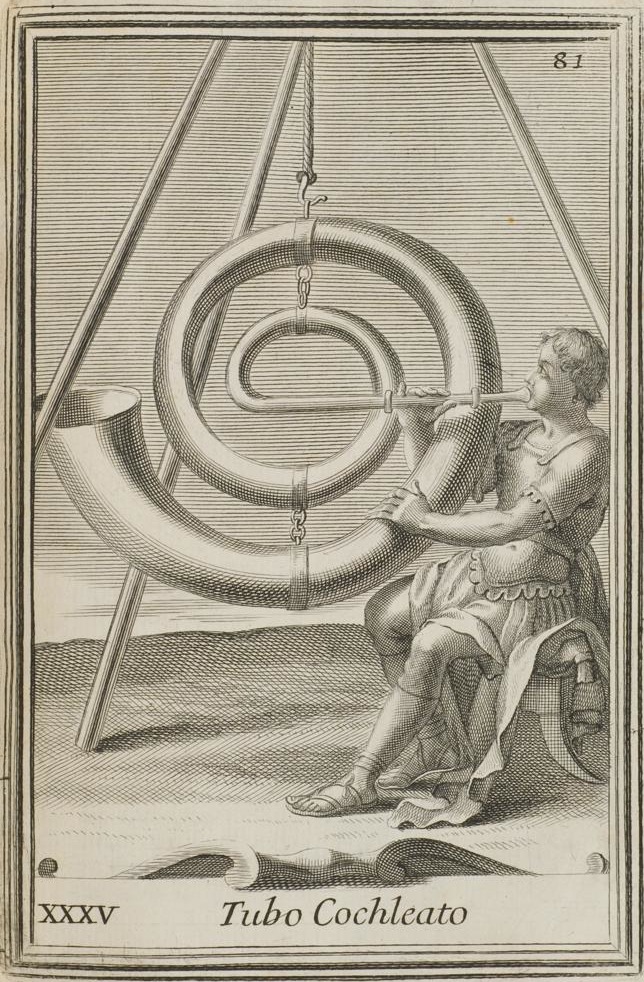
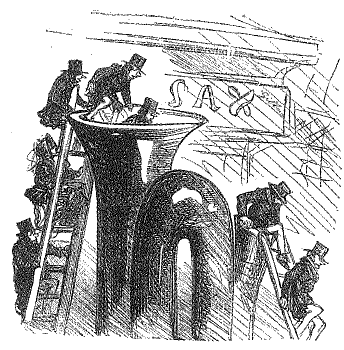
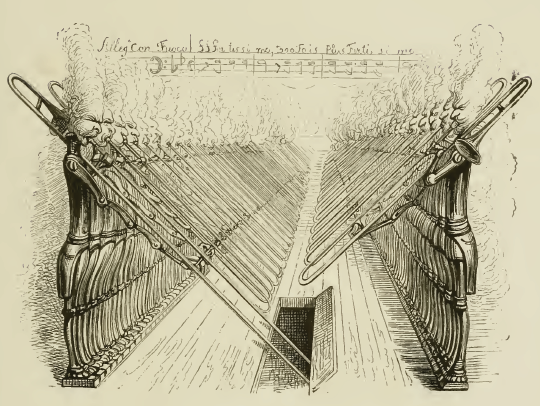
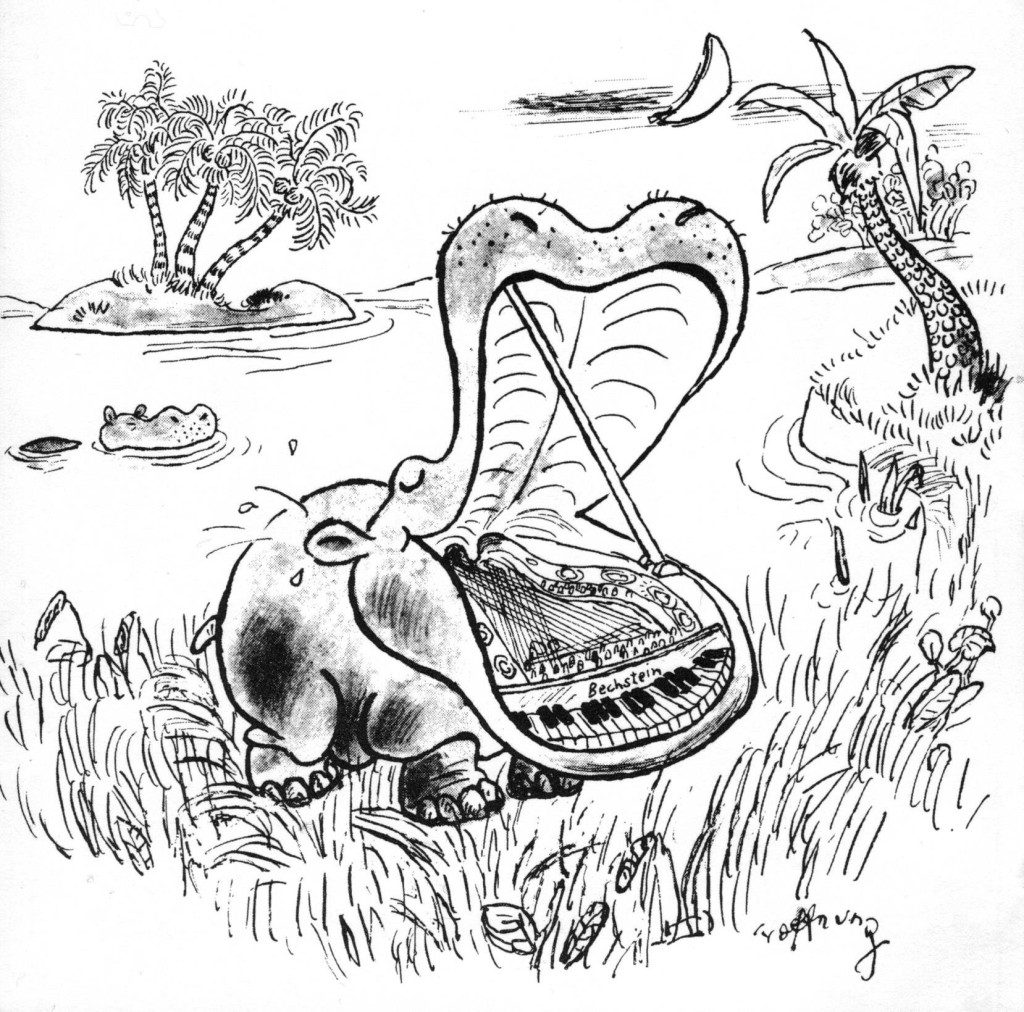
Eine schön gestaltete Website mit imaginären Musikinstrumenten aus allen Zeiten.

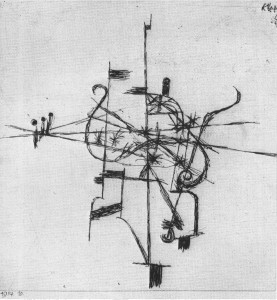
(Paul Klee, „Instrument für die Neue Musik“, 1914)

