Hatte dazu schon den Vortrag, hier noch mal dazu was in Web-Form:
http://www.bbc.com/future/story/20150420-the-strangest-sounds-in-the-world

Hatte dazu schon den Vortrag, hier noch mal dazu was in Web-Form:
http://www.bbc.com/future/story/20150420-the-strangest-sounds-in-the-world
Ryan Maguire, Doktorand für Komposition und Computerwissenschaften am Virginia Center for Computer Music der University of Virginia, kehrt den Mp3- und Mp4-Algorithmus um, d.h. alles ausgefilterte wird hörbar. Anhand von Suzanne Vegas „Toms Diner“.
Ich hab schon 2008 die Idee von „3pm“ insinuiert (in dem Interview unten), und Hannes Seidl hat die Technik zur Idee eines Orchesterstücks gemacht.
(via kfm)
#Resourcenlink:
Eine Website mit freien und kostenpflichtigen Notensatz-Schriftarten
http://www.music-notation.info/en/compmus/musicfonts.html
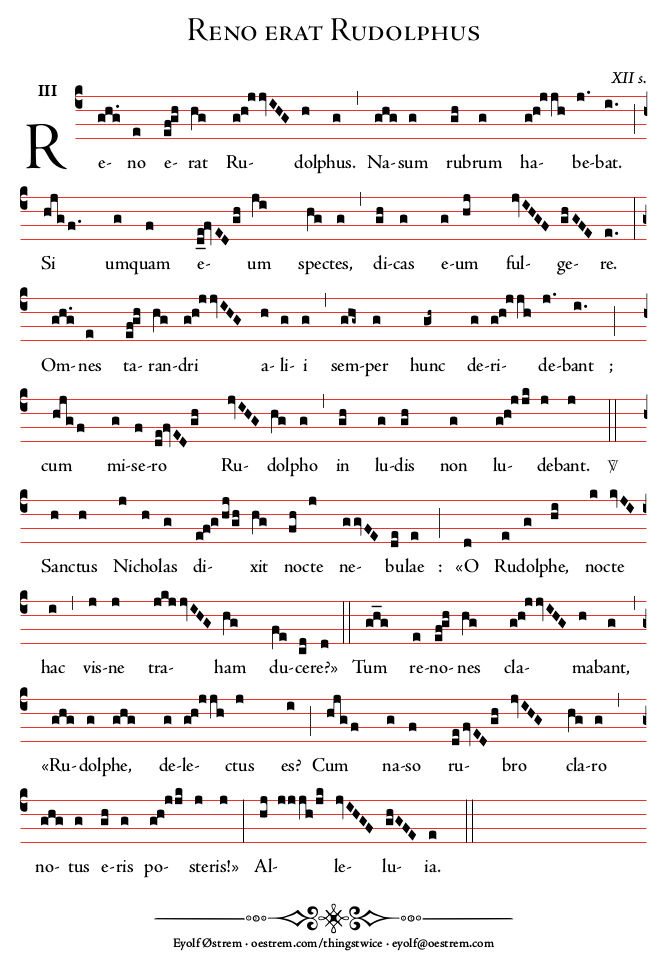
Und hier hat jemand ein gregorianisches Stück komponiert und in Noten gesetzt. Ich möchte auch mal gerne so ein (konzeptuelles) Stück komponieren und von einer Schola gesungen kriegen. #Neid
Also eigentlich der „Lautestsprecher“.
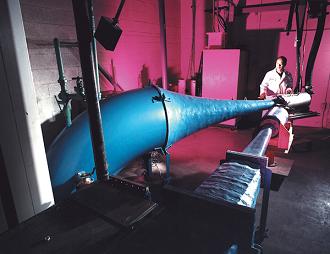
At an output of 30,000 Watts and 165dB, this speaker can be physically dangerous – consider this:
at 135 dB you experience a slight cooling sensation from the air
at 140 dB your throat and vocal chords start to vibrate
at 142 dB your chest starts to pound intensely
at 148 dB the vibration because uncomfortable and even painful
at 150 dB you experience the overwhelming sensation of being compressed as if underwater
at 155 dB the compression and expansion from vibration is felt to the core
at 158 dB the vibration is violent, and nausea becomes intense
at 190 dB eardrums rupture 50% of the time
at 198 dB human death from sound (shock wave) alone

(via noiseaddicts)
Tafelmusik, verwissenschaftlicht.
„Food and drink are among life’s most multisensory experiences,“ Spence pointed out, so it’s perhaps hardly surprising that it occurred to him that the parchment skin illusion might work in the mouth, using food rather than clothing. He recruited 200 volunteers willing to eat Pringles for science, and played them modified crunching sounds through headphones, some louder and some more muffled, as they ate. And he found that he could make a 15 percent difference in people’s perception of a stale chip’s freshness by playing them a louder crunch when they bit into it.
„The party version“ of this trick, according to Spence, was developed by colleagues in the Netherlands and Japan. Volunteers were asked to crunch on chips in time with a metronome, while researchers played crunching sounds back, in perfect synchrony, through their headphones. All was well until the researchers replaced the crunching with the sound of breaking glass—and „people’s jaws just freeze up.“
Also-
Esst alte Chips und hört euch dabei das hier auf Kopfhörern an, und sie werden viel frischer schmecken:
Und umgekehrt:
(via BoingBoing)

Hast Du Dich immer schon mal gefragt wie ein Walross so tönt? Oder suchst Du eine Soundscape-Aufnahme eines indischen Tempels in Vrindavin? All das kannst Du in der Macaulay Library finden. Dort findest Du alle analogen Aufnahmen seit 1929 (!) des Tonarchivs der Bibliothek der Cornell Universität. Die Sammlung besteht aus ca. 150.000 Aufnahmen. Vornehmlich von Vögeln, aber eben auch von anderen Tieren wie Walen, Elefanten oder Soundscapes.
(via kotzendes Einhorn)